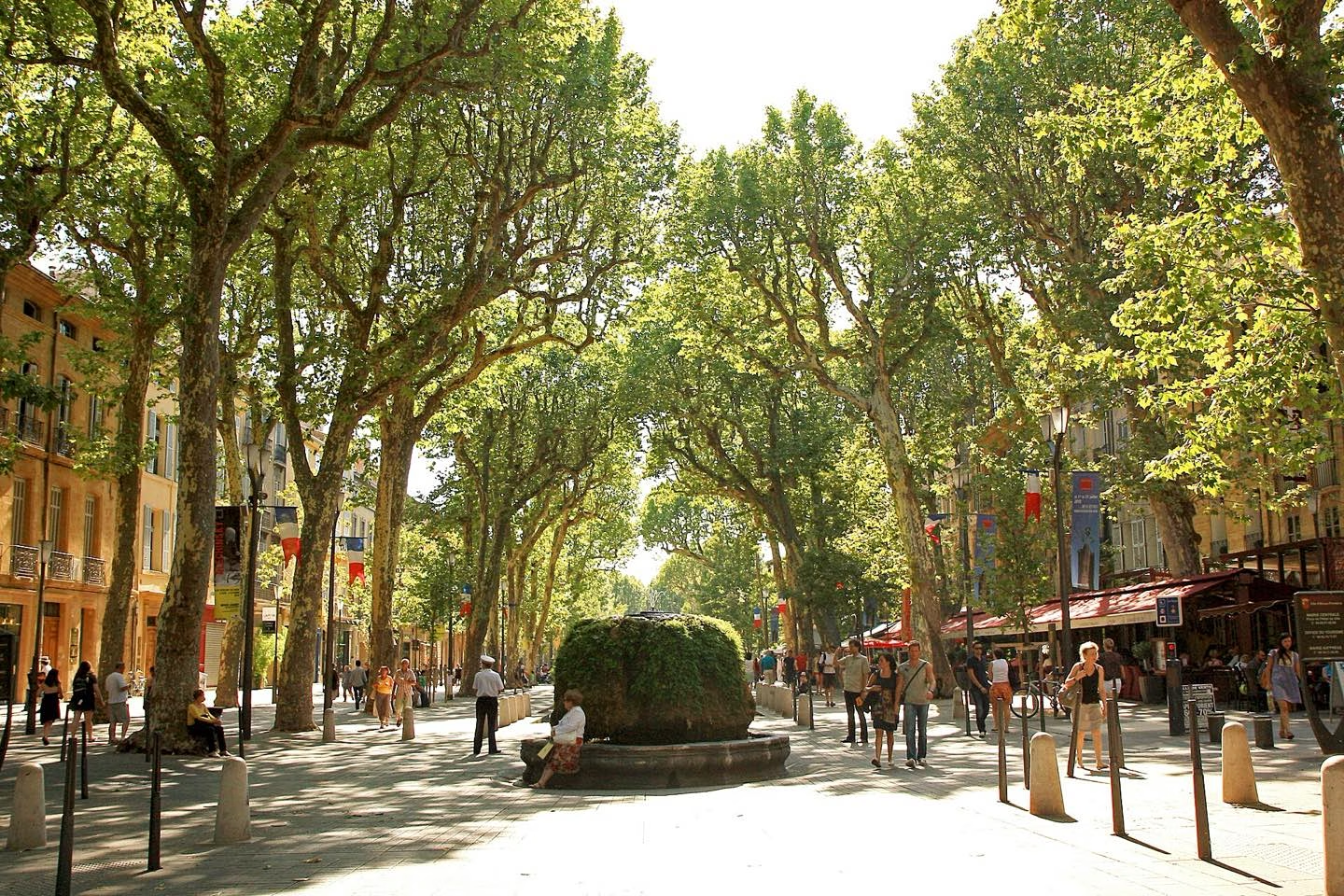
The Surprising Dark Side of Urban Greenery
For decades, planting more trees has been championed as one of the most straightforward solutions to improving air quality in cities. Green urban planning initiatives around the world have invested heavily in expanding tree canopies, operating under the assumption that more vegetation automatically means cleaner air. However, emerging scientific research is beginning to complicate that narrative in ways that city planners and environmental policymakers may not have anticipated.
It turns out that not all trees contribute equally to a healthier urban atmosphere. In fact, certain commonly planted species may be actively making things worse, particularly in densely populated areas where traffic emissions and industrial pollutants are already a significant concern.
Isoprene: The Chemical Compound at the Heart of the Issue
The key to understanding why some trees can worsen air pollution lies in a naturally occurring chemical compound called isoprene. This volatile organic compound is emitted by a wide variety of plant species as a byproduct of their normal biological processes, particularly during periods of high temperature and intense sunlight — conditions that are extremely common in urban environments during summer months.
On its own, isoprene is not considered directly harmful to human health. However, the problem arises when it interacts with other pollutants already present in city air. When isoprene combines with nitrogen oxides — which are released in large quantities by vehicle exhaust and industrial activity — it triggers a series of chemical reactions that result in the formation of ground-level ozone.
Why Ground-Level Ozone Is a Problem
Ground-level ozone is fundamentally different from the protective ozone layer found high in the stratosphere. Rather than shielding life from ultraviolet radiation, ground-level ozone is a harmful air pollutant with well-documented effects on human health. Exposure to elevated ozone concentrations has been linked to a range of respiratory problems, including aggravated asthma, reduced lung function, and increased susceptibility to respiratory infections. Vulnerable populations such as children, the elderly, and individuals with pre-existing lung conditions are at the greatest risk.
Beyond human health, ground-level ozone also damages vegetation, reduces agricultural yields, and contributes to the broader problem of urban smog. This creates a somewhat paradoxical situation where trees planted to improve city environments may be inadvertently contributing to the very pollution they are meant to combat.
Which Tree Species Are the Main Contributors?
Research has identified several tree species that are particularly high emitters of isoprene. Among the most commonly cited are willows and poplars — two species that are frequently planted in urban and peri-urban settings due to their rapid growth rates, attractive appearance, and perceived environmental benefits.
- Willows: Known for their graceful, drooping branches and tolerance for wet conditions, willows are popular choices for parks, riverbanks, and ornamental green spaces. However, they are among the most prolific isoprene emitters in the plant kingdom.
- Poplars: Fast-growing and relatively easy to maintain, poplars are widely used in urban tree-planting programs across Europe and beyond. Despite their popularity, they also rank among the higher isoprene-emitting species.
- Oaks: Certain oak species, while ecologically valuable and long-lived, are also known to release significant quantities of isoprene, particularly during hot weather conditions.
By contrast, many other tree species emit little to no isoprene. These low-emitting alternatives include fruit trees, elms, and various species of maple, all of which can provide comparable aesthetic and ecological benefits without the same air quality trade-offs.
The Urban Heat Factor
The issue is further complicated by the urban heat island effect. Cities tend to be significantly warmer than surrounding rural areas due to the concentration of buildings, paved surfaces, and human activity. Since isoprene emissions increase with temperature, the already elevated temperatures found in urban environments can amplify the problem considerably.
During summer heat waves — which are becoming more frequent and intense due to climate change — the combination of high temperatures, traffic pollution, and isoprene emissions from certain tree species can push ground-level ozone concentrations to particularly unhealthy levels. This creates a compounding cycle where the very conditions that make urban greening most appealing also maximize the potential for isoprene-related pollution.
Rethinking Urban Tree Selection
Scientists and urban planners are increasingly calling for a more nuanced approach to urban forestry. Rather than simply maximizing the number of trees planted, the focus should shift toward selecting species that deliver genuine air quality benefits without contributing to ozone formation.
This requires cities to develop more sophisticated planting strategies that take into account not just a tree's visual appeal or growth rate, but also its chemical interactions with the urban atmosphere. In areas already experiencing high levels of nitrogen oxide pollution — such as busy road corridors or industrial zones — planting high isoprene-emitting species could be particularly counterproductive.
Conversely, in areas with lower baseline pollution levels, the air quality impact of isoprene-emitting trees may be considerably less pronounced, since the ozone-forming reactions require the presence of nitrogen oxides as a catalyst.
Balancing Benefits and Drawbacks
It is important to emphasize that this research does not suggest trees are bad for cities. The broader environmental benefits of urban trees remain substantial and well-established. Trees provide shade that reduces the urban heat island effect, absorb carbon dioxide, support biodiversity, reduce stormwater runoff, and offer significant mental and physical health benefits to city residents.
The goal of this research is not to discourage tree planting but rather to encourage smarter, more informed planting decisions. By prioritizing low-isoprene species in high-pollution areas and reserving higher-emitting species for locations where their chemical output poses less of a risk, cities can maximize the positive contributions of urban greenery while minimizing unintended consequences.
Environmental scientists also note that the overall cooling effect provided by a well-planned urban tree canopy can itself help reduce ozone formation by lowering ambient temperatures — further underlining the importance of thoughtful species selection and strategic placement.
A Call for Evidence-Based Green Urban Planning
As cities worldwide accelerate their urban greening efforts in response to climate change and public health concerns, the science around tree species selection is becoming increasingly relevant. Policymakers, urban planners, and landscape architects are being encouraged to consult updated emissions data when designing green infrastructure projects.
The message from researchers is clear: when it comes to improving urban air quality through tree planting, the species chosen matters just as much as the number of trees planted. A more scientifically informed approach to urban forestry has the potential to deliver cleaner air, cooler streets, and healthier communities — outcomes that are only achievable when the complexity of plant-atmosphere interactions is properly understood and accounted for.