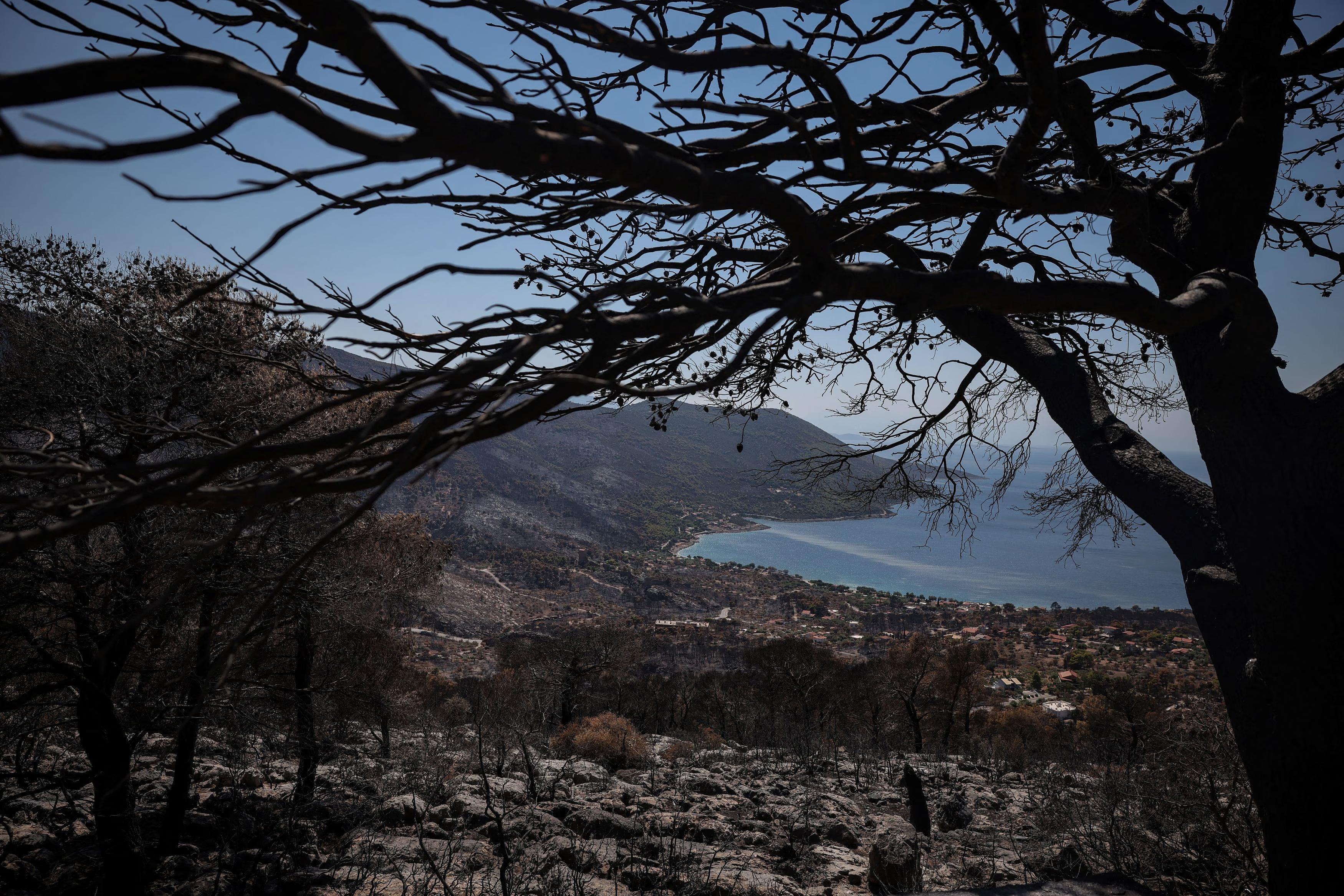
Wildfires and a Warming Continent
Europe has long grappled with seasonal wildfires, but a newly published study suggests the situation could deteriorate far more severely than previously anticipated. According to the research, the combined effects of rising temperatures and increasingly dry conditions may cause the total area burned by wildfires across the continent to triple in the coming decades if current climate trajectories are not altered.
The findings add a new layer of urgency to ongoing debates about climate policy and land management across the European Union and neighboring regions. Scientists and environmental experts have repeatedly flagged the growing threat posed by extreme weather events, and this latest study reinforces those concerns with stark projections about the future of Europe's landscapes.
The Science Behind the Projections
The study examines the relationship between climatic conditions and wildfire behavior, focusing particularly on how relatively modest shifts in temperature and precipitation can translate into dramatically larger burned areas. Researchers found that this relationship is not linear — meaning that as conditions become only slightly hotter and drier, the scale of wildfires does not increase gradually but rather accelerates sharply and disproportionately.
This non-linear dynamic is considered one of the most alarming aspects of the findings. Even a moderate warming scenario, the study suggests, could push fire-prone regions of Europe past critical thresholds beyond which fire activity intensifies rapidly. Mediterranean countries, which already experience some of the most severe wildfire seasons on the continent, are expected to face particularly acute risks.
Key Factors Driving Increased Fire Risk
- Rising temperatures: Higher average temperatures dry out vegetation more quickly, creating ideal fuel conditions for wildfires.
- Reduced rainfall: Drier summers and prolonged droughts leave forests and scrublands more vulnerable to ignition and rapid fire spread.
- Extended fire seasons: Warmer autumns and earlier springs are lengthening the window during which wildfires can occur.
- Changes in land use: Abandonment of rural land and the buildup of combustible vegetation contribute to the severity of fires when they do ignite.
- Wind patterns: Shifts in atmospheric circulation may increase the frequency of hot, dry wind events that accelerate fire spread.
Regional Impacts Across Europe
While the Mediterranean basin — encompassing countries such as Spain, Portugal, Italy, Greece, and parts of the Balkans — is widely recognized as the most fire-prone region of Europe, the study indicates that areas farther north and east may also face heightened risk as the climate continues to shift. Countries in central and northern Europe that have historically experienced fewer and less severe wildfires could find themselves increasingly exposed to fire events in forests, peatlands, and heathlands.
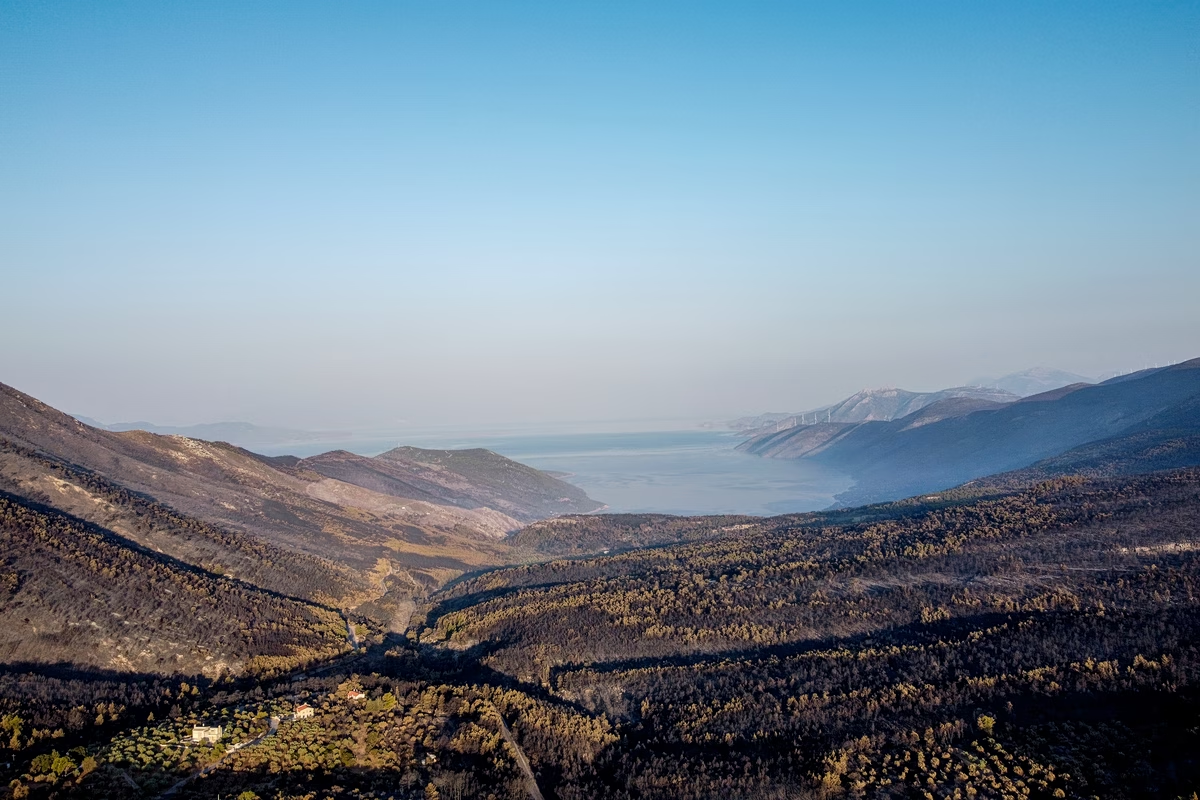
Southern Europe has already witnessed a series of historically destructive fire seasons in recent years. Vast swaths of land in Greece, Portugal, and Spain have been consumed by flames, with significant loss of human life, property, and biodiversity. The 2021 fires in Greece, for instance, burned through hundreds of thousands of hectares in a matter of weeks, offering a preview of what researchers now warn could become far more common.
Biodiversity and Ecosystem Consequences
Beyond the immediate human and economic costs, the projected increase in wildfire activity carries serious implications for European biodiversity and ecosystem health. Forests and natural habitats that are repeatedly burned may lose their capacity to regenerate fully, leading to long-term degradation of landscapes. Protected natural areas, some of which harbor rare and endangered species, are not immune to the threat.
Carbon storage is another significant concern. Forests play a crucial role in absorbing atmospheric carbon dioxide, and widespread wildfires release stored carbon back into the atmosphere, potentially creating a feedback loop that further accelerates climate change. This dynamic makes effective wildfire prevention not only an environmental priority but also a key component of broader climate mitigation strategies.
Policy and Prevention Challenges
The study's projections place new pressure on policymakers at both the national and European Union levels to invest more heavily in fire prevention, early detection systems, and emergency response capacity. While the EU has made efforts in recent years to strengthen coordinated responses to wildfire emergencies — including the expansion of the RescEU firefighting fleet — experts argue that current measures remain insufficient given the scale of the projected threat.
As conditions become warmer and drier, the areas burned by wildfires increase disproportionately and sharply, underscoring the need for immediate and sustained action on both climate and fire management policy.
Forest management practices are also under scrutiny. Controlled burns, the clearing of firebreaks, and the thinning of dense forest areas are among the tools that land managers use to reduce the risk and severity of uncontrolled fires. However, implementing these measures at the scale required across diverse and sometimes ecologically sensitive landscapes presents considerable logistical, financial, and political challenges.
The Broader Climate Context
The wildfire projections are consistent with a broader body of evidence indicating that Europe is warming faster than the global average. The continent has experienced a series of record-breaking heat waves in recent summers, and scientists attribute this acceleration in warming partly to the region's geographic position and land-use patterns.
International climate agreements, including the Paris Agreement, set targets for limiting global temperature rise that, if met, would help constrain — though not eliminate — the projected increase in wildfire risk. However, current national commitments from many countries fall short of what scientists say is needed to keep warming within the agreed limits.
Looking Ahead
The study serves as both a warning and a call to action. While the projections are sobering, researchers note that the extent of future fire damage is not predetermined. Ambitious and rapid reductions in greenhouse gas emissions combined with proactive land management and improved fire response infrastructure could significantly reduce the severity of what lies ahead.
For European governments, the message is increasingly difficult to ignore. As wildfire seasons grow longer, hotter, and more destructive with each passing year, the economic and humanitarian costs of inaction are mounting — and the window for meaningful intervention continues to narrow.