Portugal's New Legislation on Face Coverings
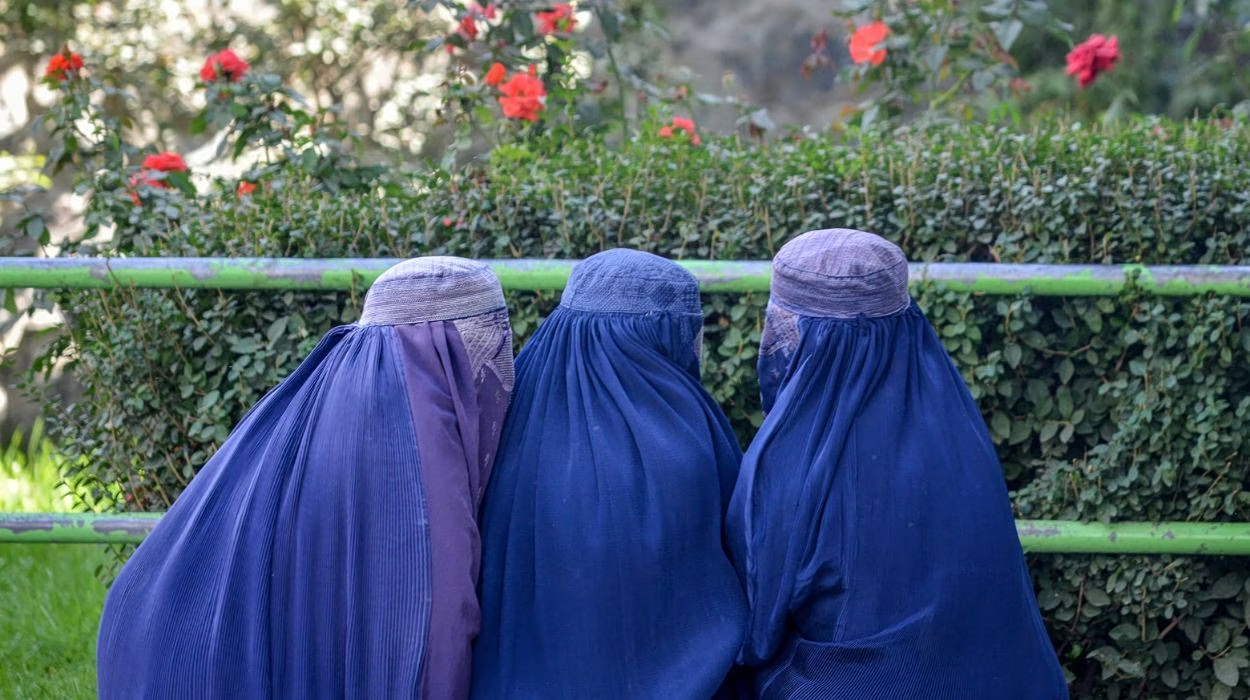
Portugal has officially enacted a law that prohibits individuals from covering their faces in public areas. This legislative change, championed by the far-right political factions within the country, is widely perceived as directly impacting Muslim women who wear full-face veils, such as the burqa or niqab. The President of Portugal, António José Seguro, signed the bill into law, emphasizing the profound significance of the human face in both identity and communication. He acknowledged the deeply sensitive social and cultural dimensions inherent in this issue, highlighting the broader implications of such a ban on a diverse society.
The parliamentary approval for this bill occurred in July, garnering support primarily from the ruling right-wing coalition and various far-right parties. Conversely, left-wing political entities expressed strong opposition to the proposed regulation, citing concerns over its potential infringements on personal liberties and religious expression. The new legal framework explicitly forbids the use of garments or any other items that obscure the face or render an individual's identification difficult in public settings. Furthermore, the legislation introduces penalties for anyone found coercing another person to cover their face based on factors such as gender, religious beliefs, age, or ethnic origin. This provision aims to prevent forced adherence to face-covering practices, acknowledging the complexities surrounding individual choices and external pressures.
Penalties and Exceptions
Individuals found in violation of this new law face significant financial penalties, ranging from 150 to 3,000 euros. These fines are intended to act as a deterrent, ensuring compliance with the prohibition on public face coverings. However, the legislation does not impose a blanket ban and includes several crucial exceptions. These exceptions acknowledge legitimate circumstances under which face coverings may be necessary or permissible, aiming to balance the objectives of the law with practical and humanitarian considerations.
One primary exception allows for face coverings when dictated by health reasons. This provision accounts for situations where medical conditions or public health directives necessitate the use of masks or other protective coverings. Additionally, the law permits face coverings in instances related to professional or artistic activities. This includes professions where protective gear is essential, such as certain industrial jobs, or artistic performances where masks or elaborate costumes are integral to the act. Environmental factors, such as severe weather conditions that require protection from extreme cold, wind, or dust, also constitute a valid exception, allowing individuals to cover their faces for practical comfort and safety.
Moreover, the legislation carves out specific exemptions for certain locations and contexts. Places of worship are excluded from the ban, recognizing the sanctity of religious sites and the diverse practices that may occur within them. Diplomatic missions, which operate under international protocols and often require specific security or ceremonial attire, are also exempt. Similarly, aircraft are not subject to this ban, likely due to international travel regulations and the varied customs of passengers from different nations. These exemptions underscore an attempt by the Portuguese legislature to create a nuanced law that addresses public safety concerns while accommodating various legitimate needs and cultural practices.
The Broader Debate: Security vs. Rights
The implementation of this regulation has ignited a robust political and social debate across Portugal. Proponents of the ban often cite concerns related to public identification and national security. They argue that the ability to clearly identify individuals in public spaces is paramount for maintaining order, preventing crime, and ensuring the safety of citizens. From this perspective, full-face coverings pose a challenge to law enforcement and security agencies, making it more difficult to monitor public areas and identify potential threats. The argument is often made that transparency of identity is a fundamental aspect of a secure and open society.
Conversely, human rights activists and civil liberties advocates have voiced strong opposition, contending that such prohibitions undermine fundamental women's rights. They argue that these laws dictate what women can and cannot wear, thereby infringing upon their freedom of expression, religious freedom, and personal autonomy. Critics emphasize that forcing women to unveil, or penalizing them for choosing to wear a full-face veil, is a form of state-sanctioned oppression rather than liberation. They highlight that true empowerment involves allowing individuals, particularly women, to make their own choices about their attire and religious practices without governmental interference.
President Seguro's acknowledgment of the issue as being "particularly sensitive from a social and cultural point of view" reflects the complex layers of this debate. It touches upon the delicate balance between collective security interests and individual freedoms, as well as the integration of diverse cultural and religious practices within a secular state. The law's impact extends beyond mere legal enforcement, delving into the very fabric of societal norms, cultural understanding, and the protection of minority rights. The ongoing discourse in Portugal mirrors similar debates that have unfolded in other European nations grappling with questions of identity, integration, and religious freedom in the public sphere.
The discussion also raises questions about the effectiveness of such bans in achieving their stated goals. While proponents argue for enhanced security, opponents often point to the potential for alienation and marginalization of specific communities. They suggest that such laws can inadvertently foster distrust and division, rather than promoting integration or safety. The psychological and social ramifications for individuals who adhere to face-covering practices, particularly those for whom it is a deeply held religious or cultural observance, are also a significant part of the critical analysis. The ban, therefore, is not merely a legal instrument but a social policy with far-reaching implications for Portuguese society and its diverse population.
International Context and Implications
Portugal is not an isolated case in implementing such legislation. Several other European countries have previously enacted similar bans or restrictions on full-face coverings in public spaces, reflecting a broader trend across the continent. Nations like France, Belgium, Austria, Denmark, and the Netherlands have all introduced various forms of legislation addressing the wearing of burqas and niqabs. These laws often cite similar justifications, including national security, integration, gender equality, and the principle of 'living together' in a secular society. However, the implementation and enforcement of these laws have frequently been met with legal challenges and ongoing social controversy, highlighting the persistent tension between state authority and individual rights.
The Portuguese law's emphasis on the face as a fundamental element of human identity and communication resonates with arguments made in other European contexts. This perspective often frames the unveiling of the face as essential for social interaction, trust, and the recognition of individuals within a public sphere. Opponents, however, counter that identity is multifaceted and not solely dependent on facial recognition, arguing that cultural and religious expressions are also integral to personal identity. The international discourse surrounding such bans often involves human rights bodies and international courts, which have sometimes ruled against blanket prohibitions, emphasizing the importance of proportionality and the protection of religious freedom.
The long-term social implications of Portugal's new law remain to be seen. While the government aims to enhance public safety and promote a particular vision of social integration, critics fear that it could lead to increased discrimination and marginalization of Muslim women. The debate is likely to continue, with activists and advocacy groups closely monitoring the law's enforcement and its effects on affected communities. The Portuguese experience will undoubtedly add to the ongoing global conversation about the complex interplay between secular governance, religious freedom, and cultural diversity in modern societies.