Deepening Turkish Engagement in Syria's Resource Sector
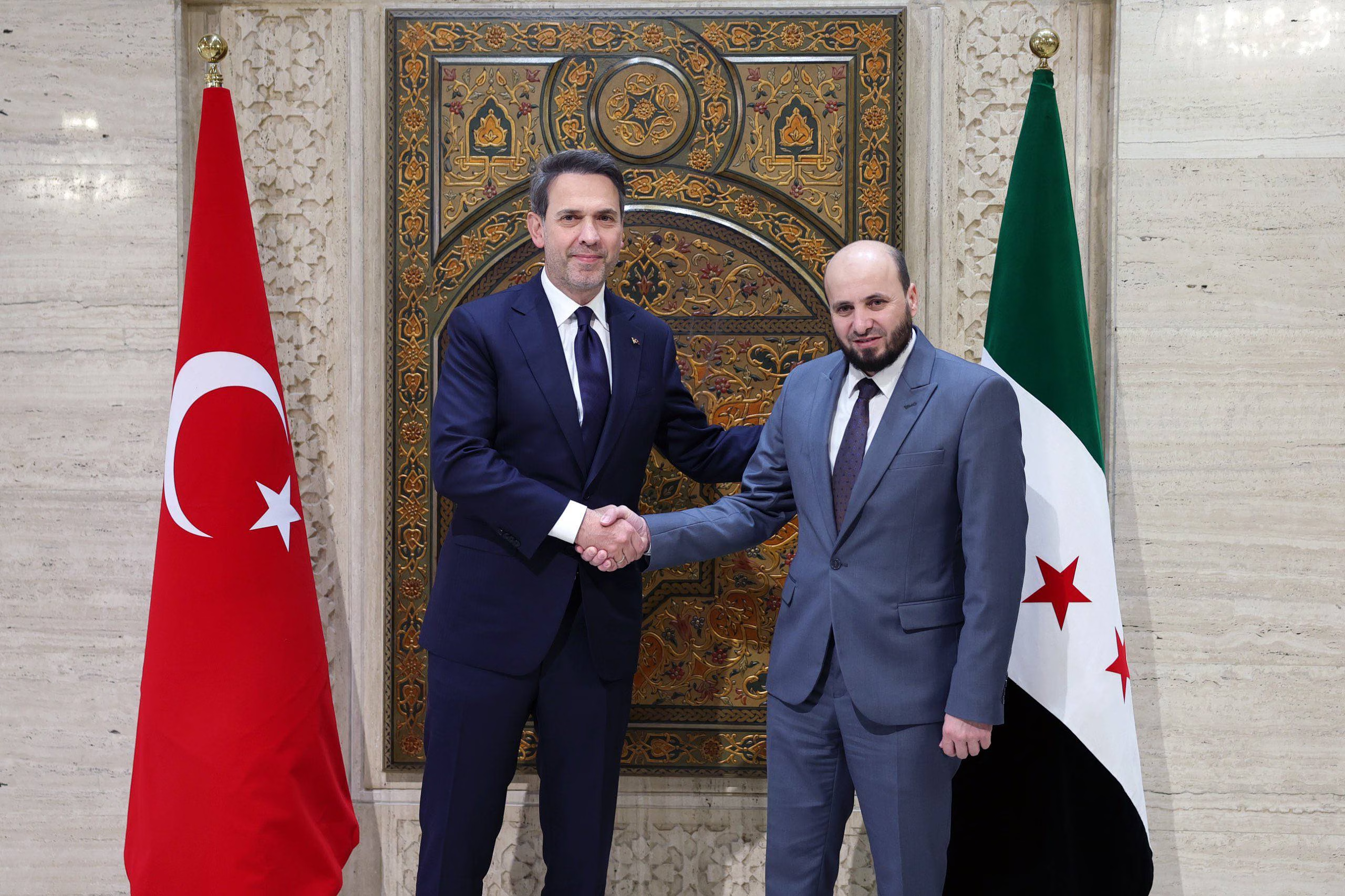
Recent reports indicate a significant development in the relationship between Turkey and Syria, specifically concerning the exploitation of natural resources. A Memorandum of Understanding (MoU) has reportedly been signed between Ankara and Damascus, focusing on the extraction and utilization of phosphate deposits within Syrian territory. This agreement is perceived by many observers as a strategic move by Turkey to deepen its economic and geopolitical footprint in its southern neighbor, which has been grappling with a protracted conflict for over a decade.
The phosphate MoU is not an isolated incident but rather fits into a broader pattern of increasing Turkish engagement in Syria. Beyond phosphates, Turkey has also expressed its readiness to assist in the development and exploitation of Syria's hydrocarbon reserves, particularly oil. This signals a potential shift in the regional dynamics, as Turkey seeks to play a more prominent role in the reconstruction and economic recovery of certain parts of Syria, particularly those under its sphere of influence or control.
The Strategic Importance of Phosphates and Oil
Syria possesses substantial reserves of phosphates, a critical mineral used primarily in the production of fertilizers. The global demand for phosphates remains consistently high due to their indispensable role in agricultural productivity. For Syria, the exploitation of these reserves could provide a much-needed revenue stream to aid in its economic recovery and rebuilding efforts. However, the capacity to effectively extract, process, and export these resources has been severely hampered by years of conflict, sanctions, and infrastructural damage.
Turkey's involvement in this sector could provide the necessary capital, technology, and expertise to revitalize Syria's phosphate industry. This collaboration, if successful, could not only benefit the Syrian economy but also provide Turkey with a stable supply of a crucial raw material, potentially reducing its reliance on international markets. The economic advantages for both nations are clear, but the geopolitical implications are equally significant.
Furthermore, the discussion around oil exploitation adds another layer of complexity and strategic importance. Syria was once a modest oil producer, and while its reserves are not as vast as some of its Gulf neighbors, they are still significant enough to attract international interest. Control or influence over oil fields could offer substantial economic benefits, providing revenue for state functions and reconstruction. For Turkey, access to Syrian oil could contribute to its energy security, a long-standing strategic objective.
Historical Context and Evolving Relations
The relationship between Turkey and Syria has been tumultuous, particularly since the onset of the Syrian civil war in 2011. Turkey initially supported opposition groups against the Syrian government, leading to a significant deterioration in diplomatic ties. However, in recent years, there have been signs of a gradual rapprochement, driven by a complex interplay of regional interests, security concerns, and economic imperatives.
This reported MoU on phosphates and the expressed interest in oil extraction suggest a pragmatic shift in Turkish policy. While political differences undoubtedly persist, both nations appear to be exploring avenues for economic cooperation, particularly in areas where mutual benefits can be realized. This approach could be seen as an attempt to stabilize the border regions, address security concerns, and foster economic interdependence, which could, in turn, contribute to a more stable regional environment.
The role of external actors in the Syrian conflict has been multifaceted, with various international and regional powers vying for influence. Turkey's increasing economic involvement, particularly in resource extraction, positions it as a key player in Syria's future economic landscape. This engagement could also be interpreted as a strategic move to solidify its presence and influence in areas where it has established military and administrative control.
Challenges and Potential Ramifications
Despite the apparent benefits, any large-scale resource exploitation project in Syria faces numerous challenges. The ongoing political instability, the presence of various armed groups, and the complex geopolitical landscape all pose significant risks. International sanctions against the Syrian government could also complicate foreign investment and trade, making it difficult to attract other partners or export resources to global markets.
Furthermore, the legal framework surrounding resource exploitation in a conflict-affected state can be ambiguous. Questions of ownership, international law, and the legitimate authority to sign such agreements could arise, potentially leading to disputes. Transparency and accountability in these deals will be crucial to ensure that the benefits accrue to the Syrian people and do not exacerbate existing inequalities or conflicts.
Another critical aspect to consider is the environmental impact of large-scale mining and oil extraction. Syria's infrastructure has been severely damaged, and environmental regulations may be difficult to enforce in the current climate. Sustainable practices and environmental protection measures will be essential to prevent long-term ecological damage.
Regional Implications and Future Outlook
The reported agreements between Turkey and Syria could have broader regional implications. They might signal a shifting balance of power and influence in the Levant, with Turkey asserting a more robust economic role. Other regional and international powers with interests in Syria will undoubtedly be observing these developments closely.
The potential for economic cooperation, even amidst political disagreements, could pave the way for further normalization of relations between Turkey and Syria. This, in turn, could have a ripple effect on the broader regional security architecture. However, the path to full normalization is likely to be long and fraught with challenges, given the deep-seated grievances and complex geopolitical dynamics at play.
Ultimately, the success of these resource development initiatives will depend on a multitude of factors, including the stability of the security situation, the ability to attract further investment, and the political will of both Ankara and Damascus to sustain their cooperation. The reported MoU on phosphates and the expressed interest in oil exploitation represent a significant step, indicating a pragmatic approach to addressing shared economic needs and strategic interests in a highly complex and volatile region.
Economic Revival and Regional Stability
The prospect of Turkish involvement in Syria's resource sector offers a glimmer of hope for economic revival in a country devastated by war. For Syria, the revenue generated from phosphates and oil could be instrumental in funding reconstruction efforts, restoring essential services, and providing employment opportunities for its population. This economic rejuvenation is a critical component of any sustainable peace process.
From Turkey's perspective, securing access to these resources not only addresses its own energy and raw material needs but also strengthens its economic leverage in the region. This economic interdependence could potentially create a shared interest in maintaining stability along their shared border, which has been a source of significant security concerns for Turkey.
However, the implementation of such agreements will require careful navigation of the intricate political landscape. The involvement of various factions and the interests of other international players mean that these projects will not be without their complexities. The international community's response, particularly regarding sanctions and investment, will also play a crucial role in determining the viability and success of these ventures.
In conclusion, the reported agreements between Turkey and Syria concerning phosphate and oil exploitation mark a notable development in their bilateral relations and the broader regional context. While promising significant economic benefits for both nations, these initiatives are set against a backdrop of geopolitical complexities and require careful management to ensure their success and contribute positively to regional stability.