Introduction to Geopolitical Tensions
In a period marked by heightened international tensions, the North Atlantic Treaty Organization (NATO) has issued a significant cautionary statement directed at Iran. This declaration comes on the heels of recent reports suggesting that Iran might consider broadening the scope of ongoing conflicts into European territories, particularly in response to a potential escalation of hostilities by the United States under a future Donald Trump administration. NATO's firm stance underscores a critical juncture in global diplomacy and security, emphasizing the collective defense principles that form the bedrock of the alliance.
The Context of the Warning
The warning from NATO is not an isolated event but rather a response to a complex and evolving geopolitical landscape. The Financial Times recently published an article detailing alleged Iranian intentions to potentially carry out actions in Europe if the current political climate in the United States leads to further military or economic pressure. Such a prospect, if realized, would represent a substantial shift in the dynamics of regional and international security, potentially drawing new actors into existing conflicts. NATO's swift and unequivocal response highlights the seriousness with which these reports are being considered within the alliance.
The alliance's primary mandate revolves around the collective defense of its member states. Article 5 of the NATO treaty, a cornerstone of its operational philosophy, stipulates that an armed attack against one member state is considered an attack against all. This principle forms the basis of NATO's commitment to mutual defense and explains the gravity of its recent statement. Any perceived threat to the security or sovereignty of a NATO member nation, regardless of its origin, is met with a unified and robust response, designed to deter aggression and maintain stability.
Allegations and Implications
The reports concerning Iran's alleged strategy to extend conflict into Europe are deeply troubling for several reasons. Firstly, they suggest a willingness to escalate hostilities beyond established theaters of engagement, potentially impacting civilian populations and economic infrastructure in European countries. Such actions could destabilize an already fragile region and provoke a broader international response. Secondly, these allegations hint at a calculated move to exert pressure on Western powers by demonstrating a capacity to inflict damage beyond conventional battlegrounds, aiming to deter intervention or influence policy decisions.
The implications of such a strategy are far-reaching. For European nations, it raises concerns about homeland security, intelligence gathering, and counter-terrorism measures. For NATO, it necessitates a reassessment of defense postures, intelligence sharing protocols, and rapid response capabilities. The alliance must consider how best to protect its borders, critical infrastructure, and populations from unconventional threats that might manifest far from traditional conflict zones. This includes evaluating cyber warfare capabilities, intelligence networks, and coordinated defense strategies among member states.
NATO's Unwavering Stance on Collective Defense
In its statement, NATO reiterated its foundational commitment to the collective defense of its member states. This commitment is not merely a political declaration but a binding obligation that has been tested and reaffirmed throughout the alliance's history. The message to Iran is clear: any action that threatens the security or territorial integrity of a NATO ally will be met with a decisive and unified response. This includes not only direct military aggression but also hybrid threats, cyberattacks, and other forms of destabilizing activities that could undermine the security of member nations.
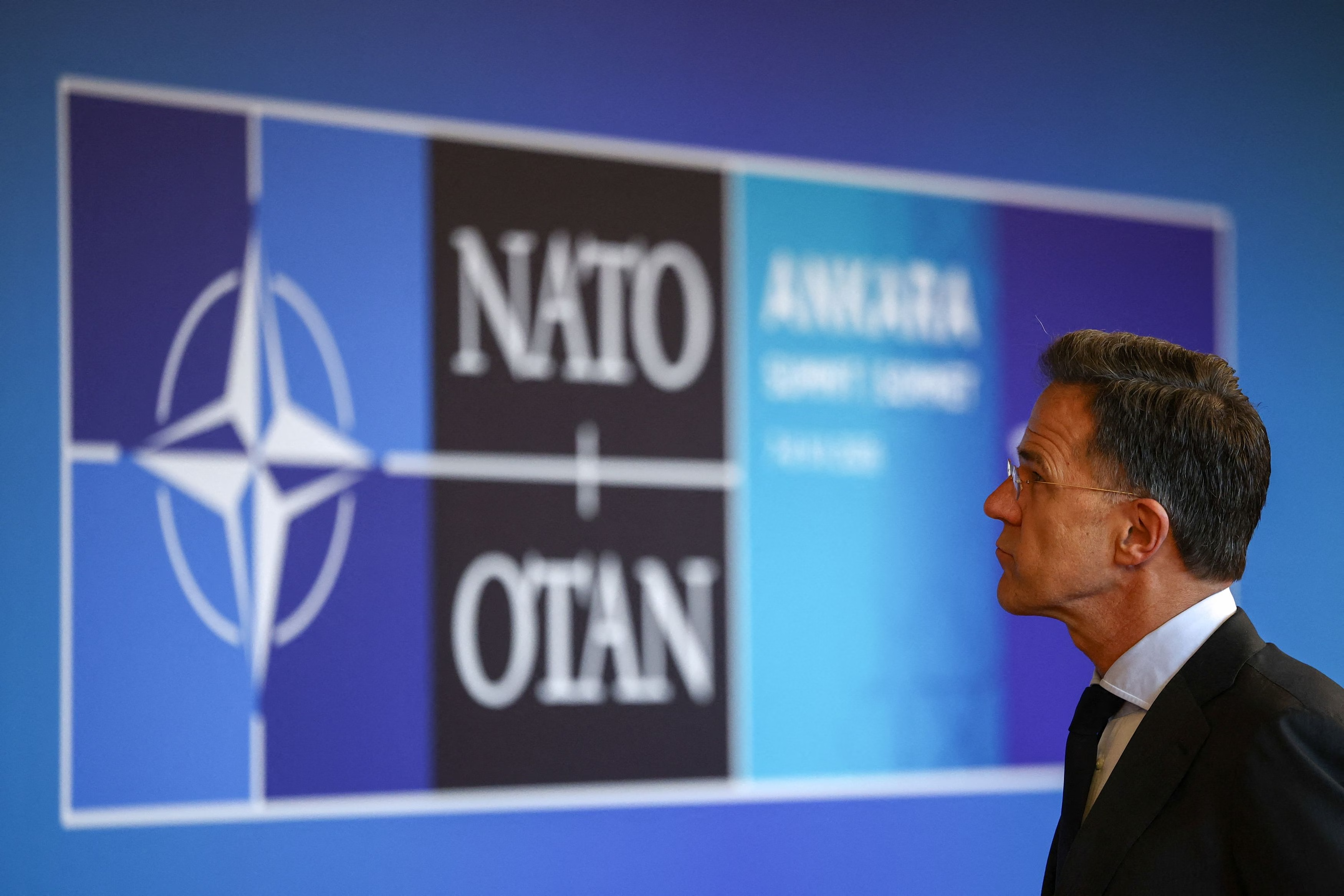
"We will defend our allies against any threat," a NATO spokesperson affirmed, reflecting the alliance's resolute position. "Our commitment to collective defense is ironclad, and we possess the capabilities and resolve to protect every inch of allied territory." This statement serves as a powerful deterrent, signaling that any miscalculation on the part of potential aggressors would invite a robust and coordinated reaction from one of the world's most formidable military alliances.
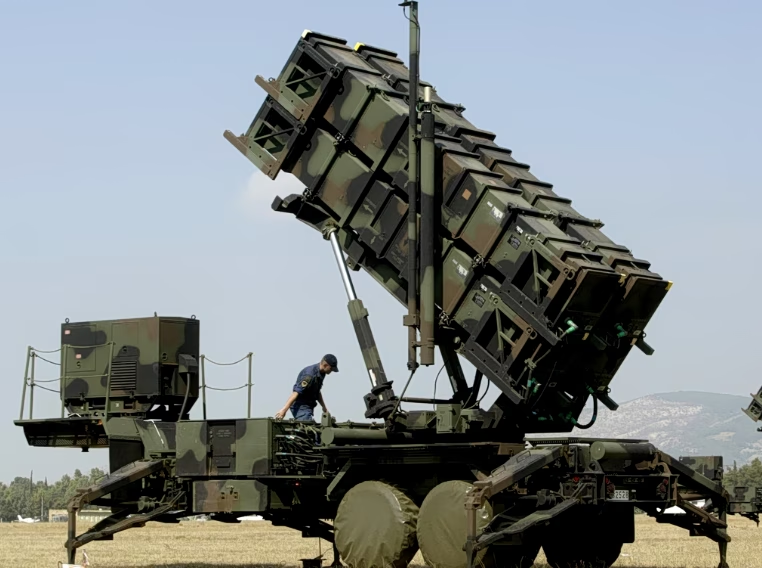
The alliance's preparedness involves continuous training exercises, strategic deployments, and ongoing intelligence sharing among member nations. These efforts ensure that NATO remains agile and responsive to emerging threats, capable of deploying resources and personnel rapidly to any point of crisis. The emphasis on readiness is particularly crucial in an era where conflicts can evolve quickly and take unexpected forms, requiring adaptable defense strategies.
The Role of Diplomacy and Deterrence
While NATO's warning is firm, it also operates within a broader framework of international diplomacy and deterrence. The goal is not solely to prepare for conflict but also to prevent it through clear communication and a credible show of force. Diplomatic channels remain open, and international efforts to de-escalate tensions are ongoing. However, the alliance's readiness to defend its members serves as a vital component of its deterrence strategy, ensuring that potential adversaries understand the severe consequences of aggressive actions.
The balance between deterrence and diplomacy is delicate. On one hand, a strong military posture and clear communication of red lines can discourage aggression. On the other hand, sustained diplomatic engagement can provide avenues for de-escalation and peaceful resolution of disputes. NATO's approach typically involves a combination of both, leveraging its military strength to back its diplomatic efforts and ensure the security of its members.
Future Outlook and International Cooperation
The situation remains fluid, with international observers closely monitoring developments in the Middle East and the broader geopolitical arena. The potential for further escalation underscores the need for continued vigilance and robust international cooperation. NATO's warning to Iran is a stark reminder of the interconnectedness of global security and the imperative for all nations to adhere to international norms and respect the sovereignty of others.
In the coming months, the international community will likely focus on diplomatic initiatives aimed at de-escalating tensions, preventing miscalculations, and reinforcing regional stability. The role of international bodies and multilateral dialogues will be crucial in navigating these complex challenges. NATO, in conjunction with its partners, will continue to monitor the situation closely, adapting its strategies as necessary to safeguard the security and interests of its member states and contribute to global peace and stability.
Ultimately, the objective is to prevent any actions that could lead to a wider conflict, ensuring the safety and security of populations both within and outside the alliance's immediate sphere of influence. The alliance's commitment to defending its members is unwavering, and its message to potential aggressors is unambiguous: any threat to NATO allies will be met with a unified and determined response.