Tragic Air Accident Claims Seven Lives in Kenya
A recent air accident involving a tourist helicopter in Kenya has led to the tragic loss of seven lives. The incident, which occurred under circumstances still being investigated, has prompted a comprehensive inquiry by the Air Accident Investigation Department (AAID). This department is now at the forefront of efforts to ascertain the precise factors that contributed to the crash, aiming to provide clarity and prevent future occurrences.
The preliminary reports indicate that the helicopter was engaged in a tourist operation, a common activity in Kenya given its vibrant wildlife and scenic landscapes. Such flights are popular among visitors seeking aerial views of national parks, game reserves, and other natural wonders. The news of the crash has sent shockwaves through the local tourism industry and the international community, highlighting the inherent risks associated with air travel, even for recreational purposes.
Initial Response and Investigation Efforts
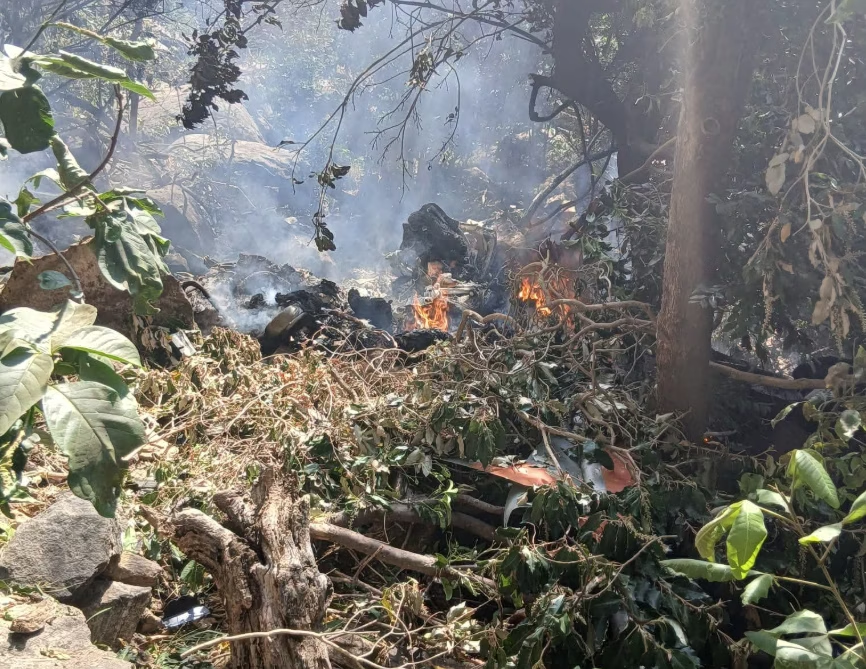
Upon receiving notification of the crash, emergency services were immediately dispatched to the scene. Due to the remote or challenging terrain often associated with tourist flight paths in Kenya, rescue and recovery operations can be complex. Details regarding the exact location of the crash and the timeline of the initial response are crucial elements that the AAID will be meticulously examining.
The Air Accident Investigation Department operates under strict international protocols for aviation accident investigation. Their mandate includes gathering evidence from the crash site, analyzing flight data recorders (if available and recoverable), inspecting wreckage for mechanical failures, interviewing witnesses, and reviewing maintenance records and pilot qualifications. The goal is to reconstruct the sequence of events leading up to the accident and identify any contributing factors, whether they be mechanical, human, environmental, or a combination thereof.
In cases involving multiple fatalities, the identification of victims and notification of next of kin are handled with utmost sensitivity and diligence. This process can be particularly challenging when victims are international tourists, requiring coordination with diplomatic missions and foreign authorities. The emotional toll on families and friends of the deceased is immense, and authorities are expected to provide support and information as the investigation progresses.
Impact on Kenya's Tourism Sector
Kenya's tourism sector is a cornerstone of its economy, attracting millions of visitors annually. Air safaris and helicopter tours are premium experiences offered by many tour operators, providing unique perspectives of the country's diverse ecosystems. While air travel is generally considered safe, incidents like this can momentarily affect perceptions of safety, potentially leading to concerns among prospective tourists.
However, the Kenyan government and tourism stakeholders are likely to emphasize their commitment to safety and adherence to international aviation standards. The thoroughness of the investigation will be critical in reassuring both the public and the industry that all necessary measures are being taken to understand and mitigate risks. It is common for such incidents to lead to reviews of existing safety regulations and operational procedures, aiming for continuous improvement.
The long-term impact on tourism typically depends on the frequency and nature of such incidents, as well as the transparency and effectiveness of the response. Kenya has a well-established reputation as a premier safari destination, and single incidents, while tragic, usually do not deter visitors in the long run, provided that safety remains a paramount concern for all operators.
The Role of Air Accident Investigation Departments
Air accident investigations are intricate and often time-consuming processes. The AAID's work is critical not only for determining the cause of a specific crash but also for contributing to global aviation safety. Findings from such investigations are often shared internationally, leading to improvements in aircraft design, maintenance practices, pilot training, and air traffic control procedures worldwide.
Investigators typically look into a wide array of potential causes. These can include engine failure, structural fatigue, electrical system malfunctions, adverse weather conditions, pilot error, air traffic control miscommunication, or even external factors like bird strikes. Each piece of evidence, no matter how small, plays a role in completing the puzzle. The wreckage, often scattered over a wide area, is meticulously collected and analyzed. This 'forensic' approach to aviation safety ensures that lessons are learned from every incident.
Moreover, the investigation will likely consider the operational history of the helicopter involved, including its age, maintenance schedule, and any previous incidents or technical issues. The flight path and weather conditions at the time of the crash will also be scrutinized. Air traffic control recordings, if available, can provide valuable insights into the final moments of the flight. The pilot's experience, training, and medical history will also form part of the comprehensive review.
The Air Accident Investigation Department's thorough and impartial inquiry is paramount to understanding the complexities of this tragic event and upholding aviation safety standards.
Ensuring Future Safety
Beyond identifying the cause, a key objective of any accident investigation is to issue safety recommendations. These recommendations are not about assigning blame but about preventing similar incidents from occurring in the future. They can be directed at aircraft manufacturers, airlines, regulatory bodies, air traffic control services, or even individual pilots and maintenance personnel.
For the Kenyan tourism sector, these recommendations could lead to enhanced safety protocols for scenic flights, stricter oversight of tour operators, or updated training requirements for pilots operating in challenging environments. The commitment to implementing such recommendations is crucial for maintaining public confidence in air travel and ensuring the long-term viability of the tourism industry.
The tragic loss of life in this helicopter crash serves as a somber reminder of the importance of continuous vigilance and adherence to the highest safety standards in aviation. As the investigation unfolds, the global aviation community will be keenly watching for its findings, hoping to glean insights that will contribute to making air travel safer for everyone, everywhere.
The process of investigation is often lengthy, and it may be several months before a final report is published. During this period, speculation is common, but authorities typically urge patience and reliance on official statements as the only credible sources of information. The focus remains on a fact-based analysis to honor the memory of those lost and to safeguard against future tragedies.