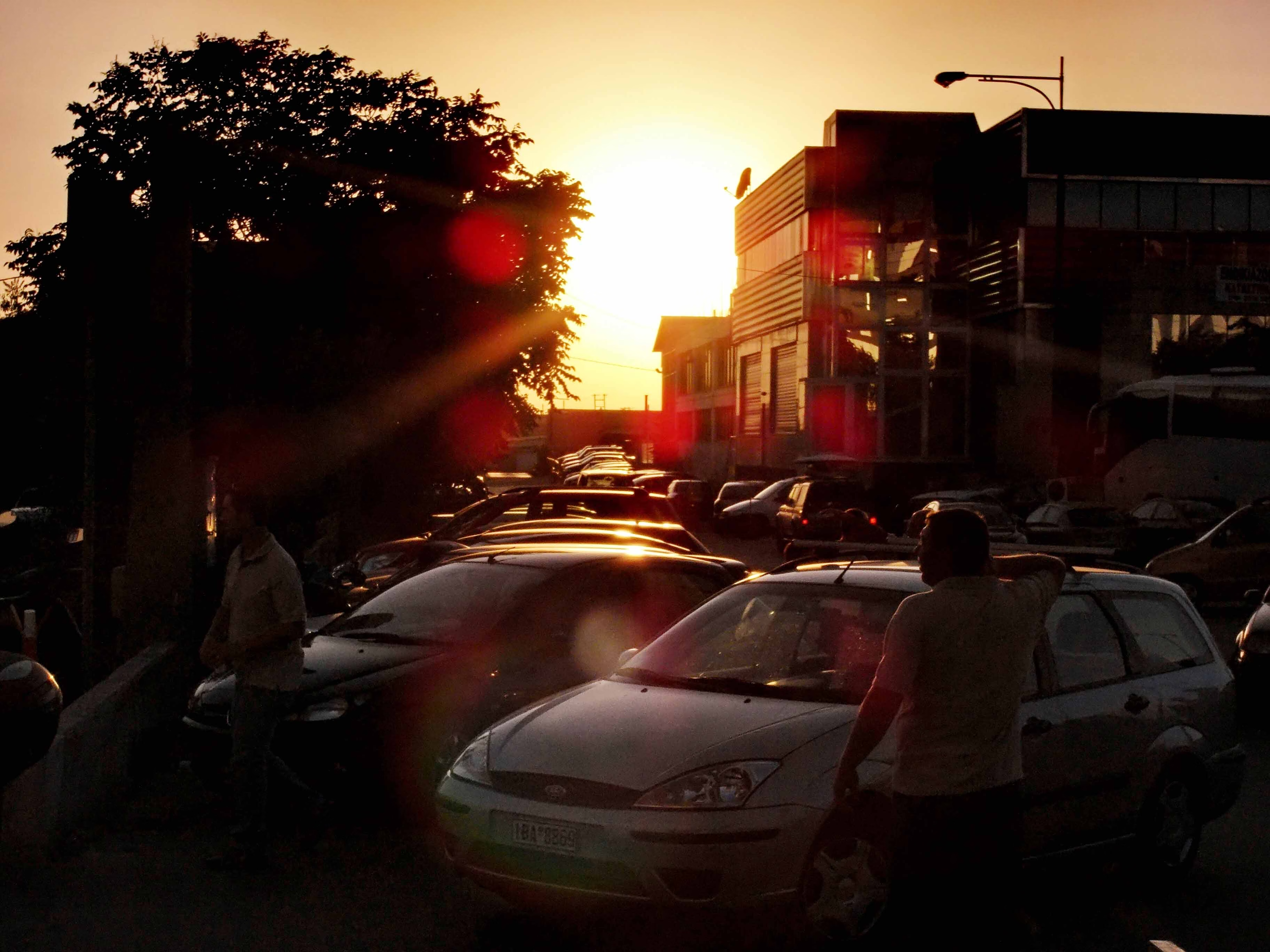
The Silent Threat of Warming Nights
The escalating issue of global warming is not merely confined to sweltering daytime temperatures; it extends insidiously into the night, fundamentally altering the thermal environment crucial for human health. Recent studies underscore a troubling trend: nights are no longer providing the necessary respite and cooling for the human body to recuperate from the day's heat. This 'dark side' of heatwaves, characterized by elevated nocturnal temperatures, presents a complex array of physiological and societal challenges that demand urgent attention and innovative solutions.
Historically, the human body has relied on cooler nighttime conditions to regulate its core temperature, facilitating essential biological processes such as sleep, cellular repair, and cardiovascular recovery. This natural thermoregulation mechanism is now under unprecedented strain as average global nighttime temperatures continue to climb. The ramifications are far-reaching, impacting public health, energy consumption, and overall quality of life, particularly in urban areas and for vulnerable populations.
Physiological Impacts of Insufficient Nighttime Cooling
The human body is exquisitely designed to maintain a stable core temperature, a process known as thermoregulation. During the day, particularly in hot climates, the body employs various mechanisms like sweating and vasodilation to dissipate heat. However, these mechanisms are most effective when there is a significant temperature differential between the body and its environment. Cooler nights provide this crucial differential, allowing the body to offload accumulated heat and restore equilibrium.
When nighttime temperatures remain elevated, this natural cooling process is severely hampered. One of the most immediate and widespread consequences is disrupted sleep. High ambient temperatures make it difficult to fall asleep and maintain deep, restorative sleep cycles. Sleep deprivation, in turn, has a cascade of negative health effects, including impaired cognitive function, reduced immune response, increased risk of chronic diseases such as hypertension and diabetes, and heightened susceptibility to mental health issues like anxiety and depression.
Moreover, the cardiovascular system is placed under additional stress. During sleep, the heart rate and blood pressure typically decrease, allowing the cardiovascular system to rest and recover. Persistently warm nights force the heart to work harder to pump blood to the skin for cooling, preventing this essential recovery period. This sustained strain can exacerbate existing cardiovascular conditions and increase the risk of heat-related illnesses, especially in the elderly and individuals with pre-existing heart problems.
The body's metabolic processes are also affected. Prolonged exposure to heat, even at night, can lead to dehydration and electrolyte imbalances, further compromising physiological functions. The kidneys, for instance, work harder to process fluids, and in extreme cases, this can lead to kidney strain or failure. The cumulative effect of these physiological stresses can significantly increase morbidity and mortality rates during prolonged heatwave events.
The Urban Heat Island Effect and Vulnerable Populations
The problem of warming nights is often exacerbated in urban environments due to the urban heat island (UHI) effect. Cities, with their extensive concrete and asphalt surfaces, absorb and retain more solar radiation during the day compared to rural areas. These materials then slowly release the stored heat throughout the night, keeping urban temperatures significantly higher than surrounding natural landscapes. This phenomenon creates a vicious cycle where cities become 'heat traps,' intensifying the impact of global warming on their inhabitants.
Vulnerable populations bear the brunt of these warming nights. The elderly, infants, young children, individuals with chronic illnesses, and those with lower socioeconomic status are particularly at risk. Many elderly individuals have reduced physiological capacity to regulate temperature and may live in homes without adequate cooling systems. Low-income communities often reside in older, poorly insulated buildings, or in neighborhoods with less green space, intensifying their exposure to heat. These disparities underscore the social equity dimensions of climate change and the urgent need for targeted interventions.
Long-Term Health and Societal Repercussions
The continuous disruption of the body's natural cooling and recovery cycles due to persistently warm nights has profound long-term health implications. Beyond the immediate risks of heatstroke and dehydration, chronic heat stress can contribute to the progression of various non-communicable diseases. The disruption of sleep, as mentioned, is a significant factor in the development and worsening of cardiovascular disease, metabolic disorders, and neurological conditions.
From a societal perspective, the economic costs are substantial. Increased hospitalizations and emergency room visits during heatwaves strain healthcare systems. Reduced productivity due to fatigue and heat-related illnesses impacts various sectors of the economy. Energy demands for air conditioning skyrocket, leading to higher utility bills and increased carbon emissions, further contributing to the very problem they are trying to mitigate.
Moreover, the psychological toll cannot be underestimated. The inability to escape the heat, even at night, can lead to increased stress, anxiety, and a diminished sense of well-being. This constant discomfort can erode mental resilience and contribute to a decline in overall quality of life.
Mitigation and Adaptation Strategies
Addressing the challenge of warming nights requires a multi-faceted approach, encompassing both global mitigation efforts to combat climate change and localized adaptation strategies. At the global level, aggressive reductions in greenhouse gas emissions are paramount to stabilize and eventually reverse the trend of rising temperatures.
Locally, urban planning and infrastructure development play a critical role. Implementing 'cool roofs' and 'cool pavements' that reflect rather than absorb solar radiation can significantly reduce urban heat island effects. Expanding green spaces, parks, and urban forests provides natural cooling through evapotranspiration and offers shaded areas for respite. Designing buildings with better insulation, natural ventilation, and energy-efficient cooling systems can reduce indoor heat exposure.
Public health interventions are also crucial. Establishing cooling centers during heatwaves, providing educational campaigns on heat safety, and implementing early warning systems can help protect vulnerable populations. Policies that support affordable access to air conditioning or other cooling technologies for low-income households are also essential.
Individual actions, though seemingly small, collectively contribute to resilience. Staying hydrated, wearing light clothing, and adjusting daily routines to avoid peak heat hours are important. For those without air conditioning, simple strategies like taking cool showers before bed, using fans, and creating cross-ventilation can offer some relief.
The phenomenon of rising nighttime temperatures represents a critical and often overlooked dimension of the climate crisis. It challenges the fundamental physiological processes that allow the human body to thrive, turning what should be a period of recovery into a prolonged struggle against heat stress. As global temperatures continue their upward trajectory, understanding and addressing the implications of warming nights will be essential for safeguarding public health and fostering resilient communities in an increasingly hot world.