European Union Unites Against US Sanctions on ICC
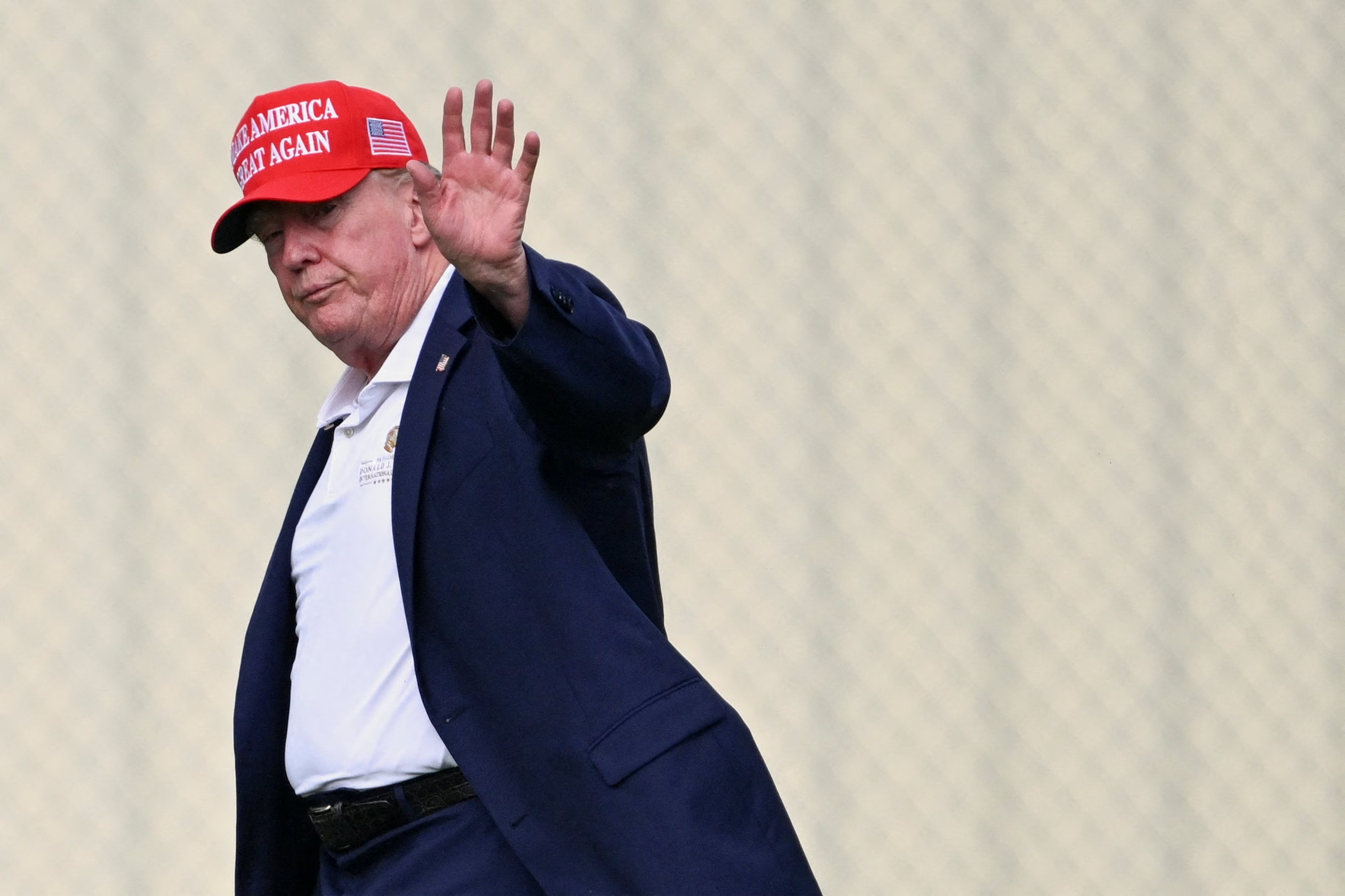
In a significant display of international solidarity, leading figures within the European Union have unequivocally condemned the United States' decision to impose sanctions on key officials of the International Criminal Court (ICC). Ursula von der Leyen, President of the European Commission, and António Costa, Prime Minister of Portugal and former President of the Council of the European Union, have publicly articulated their strong disapproval, emphasizing the critical importance of the ICC's independence and its vital role in upholding international justice. This unified stance underscores a broader European commitment to multilateralism and the rule of law on a global scale, directly challenging what many perceive as unilateral actions by the US administration.
The Genesis of the Sanctions: A US Perspective
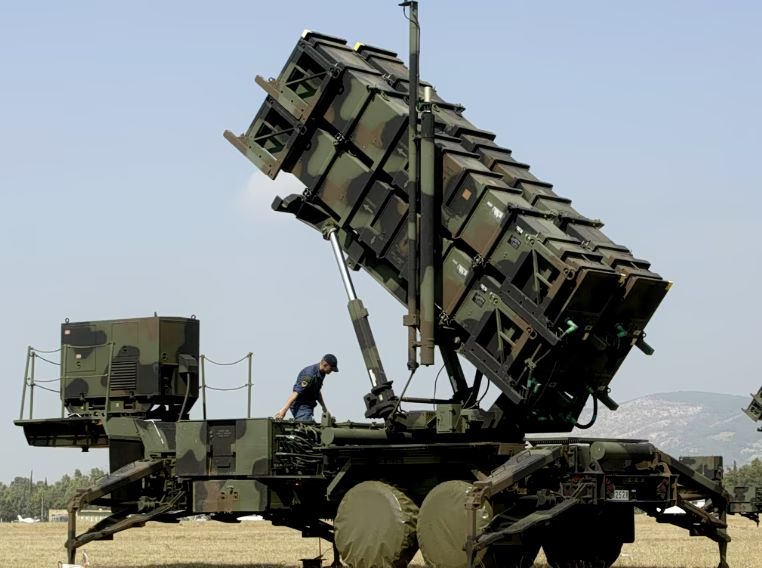
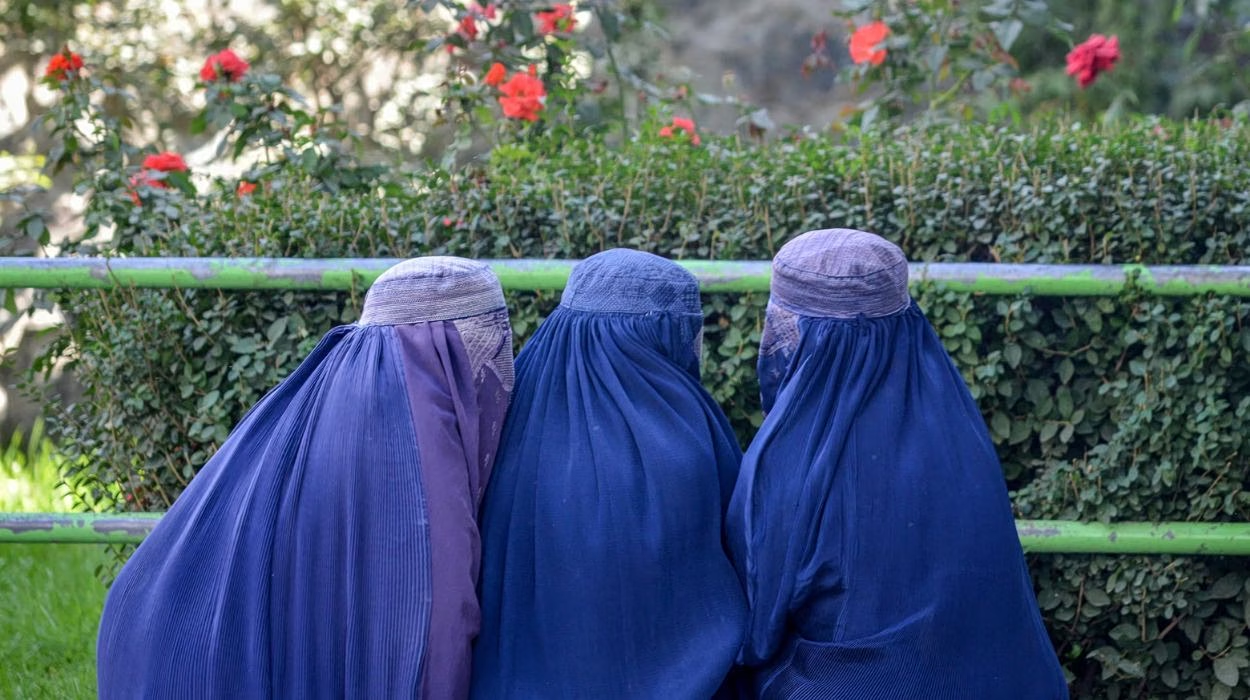
The US sanctions, which target the ICC's Chief Prosecutor and another senior official, stem from the court's decision to initiate an investigation into alleged war crimes committed by US military personnel and intelligence operatives in Afghanistan. This investigation, authorized by the ICC's Pre-Trial Chamber, also extends to alleged atrocities perpetrated by Afghan forces and the Taliban. From Washington's viewpoint, the ICC lacks jurisdiction over American citizens, citing that the United States is not a signatory to the Rome Statute, the treaty that established the court. The US administration has consistently maintained that its own robust legal system is fully capable of addressing any misconduct by its service members, thereby rendering external judicial intervention unnecessary and unwelcome. This position is rooted in a long-standing American policy of protecting its sovereignty and preventing its citizens from being subjected to international judicial bodies it does not formally recognize.
EU's Steadfast Defense of the ICC's Mandate
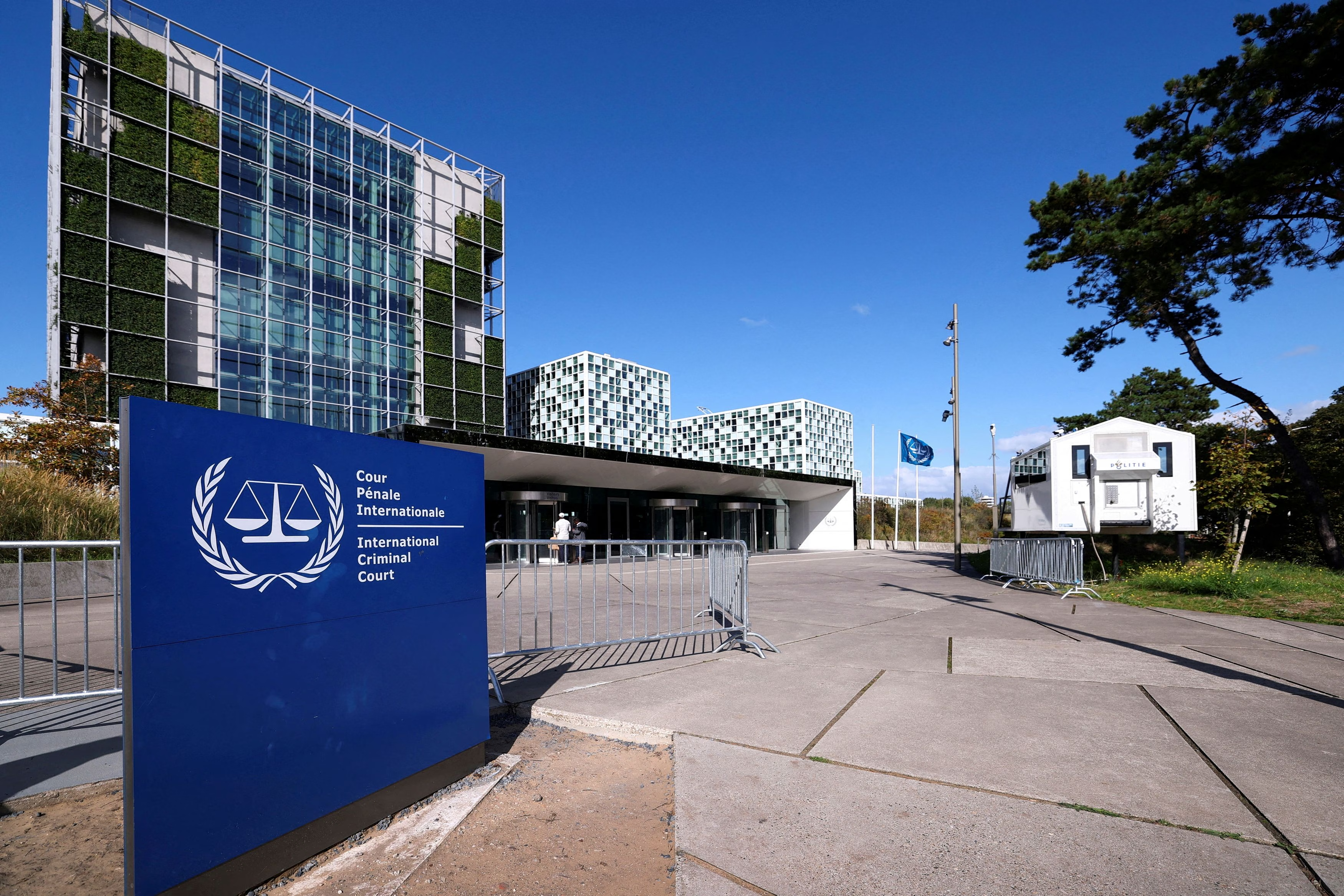
Conversely, the European Union views the ICC as an indispensable institution for ensuring accountability for the most heinous international crimes, including genocide, war crimes, crimes against humanity, and the crime of aggression. EU officials argue that any attempt to undermine the court's authority or obstruct its investigations poses a direct threat to the international legal order and the pursuit of justice for victims worldwide. Von der Leyen and Costa's statements reflect a deep-seated conviction within the EU that the ICC must be allowed to operate without political interference or intimidation. They highlight the court's role as a last resort when national jurisdictions are unwilling or unable to prosecute such crimes, thereby filling a crucial gap in global justice mechanisms. The EU's support for the ICC is not merely rhetorical; it is backed by substantial financial contributions and diplomatic efforts aimed at strengthening the court's capacity and legitimacy.
The Broader Implications for Transatlantic Relations
This dispute over the ICC's jurisdiction and the subsequent US sanctions has inevitably cast a shadow over transatlantic relations, already strained by various disagreements on trade, climate change, and security policies. While both the US and the EU generally align on democratic values and human rights, their approaches to international institutions and the application of international law often diverge. The EU's firm opposition to the sanctions signals a clear message that it will not compromise on its commitment to multilateralism and the independence of international judicial bodies, even when faced with pressure from a key ally. This divergence could potentially complicate future cooperation on other global issues, as it underscores fundamental differences in foreign policy philosophies. The incident also raises questions about the future of global governance and the balance of power in an increasingly multipolar world, where traditional alliances are being re-evaluated and redefined.
Legal and Ethical Considerations of the Sanctions
From a legal standpoint, the US sanctions against ICC officials have been widely criticized by international legal experts and human rights organizations. Many argue that these measures violate principles of international law, including the immunity of judicial officials and the obligation of states to cooperate with international judicial bodies. Critics contend that such sanctions set a dangerous precedent, potentially emboldening other powerful nations to retaliate against international courts or tribunals that investigate their actions. Ethically, the sanctions are seen by many as an attempt to circumvent accountability for serious crimes, effectively placing certain individuals or nations above the law. This perception undermines the universal application of justice and the principle that no one should be immune from prosecution for grave international offenses. The ethical debate centers on whether political expediency should ever override the moral imperative to pursue justice for victims of atrocities.
Historical Context: US-ICC Relations
The relationship between the United States and the International Criminal Court has been complex and often contentious since the court's inception. While the US played a significant role in the drafting of the Rome Statute, it ultimately chose not to ratify the treaty due to concerns about potential politically motivated prosecutions of its citizens. Throughout various administrations, the US has maintained a policy of non-cooperation with the ICC, even enacting legislation in the early 2000s, known as the American Servicemembers' Protection Act, which authorized the President to use "all means necessary and appropriate" to free any US or allied personnel detained by the court. This historical backdrop helps to explain the current administration's strong reaction to the ICC's investigation, viewing it as a direct challenge to long-held US policy and a violation of its sovereign rights. The current sanctions, therefore, are not an isolated incident but rather a continuation of a long-standing tension between US national interests and the evolving framework of international criminal justice.
The Path Forward: Diplomatic Resolution or Escalation?
The current standoff presents a diplomatic challenge for both the United States and the European Union. The EU's firm stance signals a desire to protect the integrity of the ICC and uphold the principles of international law, while the US remains committed to safeguarding its national interests and its military personnel. A potential path forward could involve renewed diplomatic engagement aimed at finding common ground, perhaps through discussions on the scope of the ICC's jurisdiction or mechanisms for ensuring fair and impartial investigations. However, without a willingness from both sides to compromise, the situation risks further escalation, potentially leading to a deeper rift in transatlantic relations and further undermining the already fragile international legal order. The outcome of this dispute will likely have lasting implications for the future of international justice and the effectiveness of global institutions in holding powerful actors accountable for their actions on the world stage.
Future of International Criminal Justice
This episode highlights the ongoing challenges faced by international criminal justice institutions in asserting their authority and ensuring accountability in a world dominated by powerful nation-states. The ICC, despite its limitations and criticisms, remains a crucial symbol of the international community's commitment to ending impunity for mass atrocities. The support from the EU, particularly from high-profile leaders like Ursula von der Leyen and António Costa, is essential for the court's continued legitimacy and operational capacity. Their vocal opposition to the US sanctions sends a powerful message that the principles of international law and the pursuit of justice cannot be sacrificed for political expediency. The future effectiveness of the ICC and other similar bodies will largely depend on the sustained political will and unwavering support from states that believe in the universal application of justice, even when it challenges the interests of powerful allies.