Preserving the Echoes of Industry: A National Endeavor
In a significant move towards cultural preservation and sustainable development, a powerful consortium of national organizations has announced a joint effort to valorize and promote Greece's industrial heritage. The Central Union of Municipalities of Greece (KEDE), in collaboration with the Hellenic Agency for Local Development and Local Government (EETAA) and the Hellenic Society for the Environment and Cultural Heritage (ELLET), is spearheading an initiative designed to bring the nation's industrial past into the contemporary spotlight. This partnership underscores a growing recognition of the intrinsic value embedded within industrial sites, not merely as relics of a bygone era but as vital components of national identity, economic potential, and educational resources.
The convergence of these three distinct yet complementary entities promises a multifaceted approach to industrial heritage management. KEDE, representing the collective voice of Greek municipalities, brings to the table a deep understanding of local governance, community engagement, and the practicalities of implementing projects at a grassroots level. Its involvement is crucial for ensuring that initiatives are tailored to the specific needs and characteristics of different regions, fostering local ownership and participation. EETAA, with its expertise in supporting local authorities and fostering development, is poised to provide the necessary technical assistance, strategic planning, and capacity building for municipalities involved in the project. Their role will be instrumental in translating overarching goals into actionable plans and ensuring the long-term sustainability of the interventions. Finally, ELLET, a venerable institution dedicated to the protection of cultural and natural heritage, contributes its extensive experience in conservation, research, and advocacy. Their involvement guarantees that the project adheres to the highest standards of heritage protection and interpretation, ensuring that the historical integrity and cultural significance of industrial sites are preserved for future generations.
The Untapped Potential of Industrial Legacies
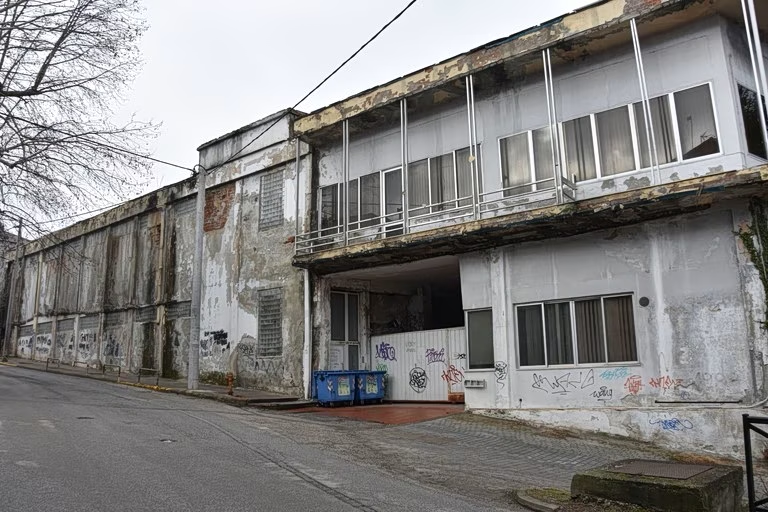
Greece, often celebrated for its ancient and Byzantine heritage, also possesses a less-explored but equally compelling industrial legacy. From early textile factories and olive oil mills to mining operations, shipyards, and power plants, these sites bear witness to the nation's journey through modernization, technological advancement, and economic transformation. Many of these structures, while architecturally significant and historically rich, currently lie derelict or underutilized, their stories untold and their potential untapped. The collaborative initiative aims to reverse this trend, transforming these forgotten spaces into vibrant centers for culture, education, tourism, and even economic regeneration.
The project's scope is envisioned to be broad, encompassing various aspects of industrial heritage. This includes, but is not limited to, the identification and documentation of significant industrial sites across the country, the development of comprehensive conservation plans, and the implementation of adaptive reuse strategies. Adaptive reuse, a key principle in modern heritage management, seeks to find new, contemporary functions for historic buildings while respecting their original character. This could involve converting old factories into museums, cultural centers, educational facilities, or even innovative business incubators. Such transformations not only preserve the physical structures but also breathe new life into surrounding communities, creating employment opportunities and attracting visitors.
A Holistic Framework for Revitalization
The joint undertaking by KEDE, EETAA, and ELLET is not merely about preserving old buildings; it is about establishing a holistic framework for understanding, appreciating, and leveraging industrial heritage. This framework will likely involve several key pillars:
- Inventory and Documentation: A systematic effort to identify, survey, and document industrial sites, creating a comprehensive national inventory. This will involve historical research, architectural analysis, and the collection of oral histories from individuals who worked in these industries.
- Conservation and Restoration: Implementing best practices for the physical preservation and restoration of industrial structures and machinery, ensuring their structural integrity and historical authenticity.
- Interpretation and Education: Developing engaging interpretive programs, exhibitions, and educational materials to communicate the stories of industrial heritage to a wide audience, including local communities, schools, and tourists.
- Tourism Development: Creating industrial heritage routes and attractions that can draw visitors, contributing to local economies and promoting sustainable tourism. This could involve guided tours, thematic trails, and interactive experiences.
- Community Engagement: Fostering active participation from local communities in the planning and implementation phases of the project, ensuring that the initiatives are relevant to their needs and aspirations. This includes involving former industrial workers and their families in sharing their experiences.
- Policy and Advocacy: Working with national and local authorities to develop supportive policies and regulatory frameworks for the protection and sustainable management of industrial heritage. This also involves advocating for increased funding and resources for these initiatives.
One of the significant challenges in industrial heritage preservation is securing adequate funding. The sheer scale of many industrial sites and the specialized nature of their conservation often require substantial financial investment. The involvement of KEDE and EETAA is expected to facilitate access to various funding mechanisms, including national development programs, European Union structural funds, and potentially private sector partnerships. Their collective influence can also help in lobbying for dedicated resources for industrial heritage initiatives, recognizing their broader societal benefits.
Economic and Social Dividends
Beyond the cultural and historical imperative, the revitalization of industrial heritage holds considerable economic and social promise. By transforming disused industrial complexes into productive spaces, the project can stimulate local economies through job creation in construction, tourism, and cultural sectors. Moreover, these regenerated sites can become catalysts for urban renewal, attracting further investment and improving the quality of life in surrounding areas. The development of specialized skills in heritage conservation and adaptive reuse can also create new professional opportunities.
Socially, the project can foster a stronger sense of local identity and pride. Industrial sites are often deeply intertwined with the collective memory of communities, representing generations of labor, innovation, and social change. By preserving and interpreting these sites, communities can reconnect with their past, understand their present, and envision their future. Educational programs associated with industrial heritage can offer invaluable insights into technological advancements, economic history, and the evolution of labor relations, enriching the learning experience for students of all ages.
"The collaboration between KEDE, EETAA, and ELLET marks a pivotal moment for Greece's industrial heritage. It signifies a shared commitment to recognizing the multifaceted value of these sites and ensuring their sustainable future. By pooling resources and expertise, we can unlock the immense potential of our industrial past to enrich our present and inform our future," stated a representative involved in the initiative.
The success of this ambitious undertaking will depend on sustained collaboration, innovative planning, and dedicated implementation. As Greece continues to navigate its path through economic and social challenges, the strategic valorization of its industrial heritage offers a unique opportunity to build upon the foundations of the past, creating new pathways for cultural enrichment, economic development, and community resilience. This joint initiative is a testament to the power of partnership in achieving significant cultural and societal goals, ensuring that the legacy of Greece's industrial pioneers is not forgotten but celebrated and integrated into the fabric of contemporary life.