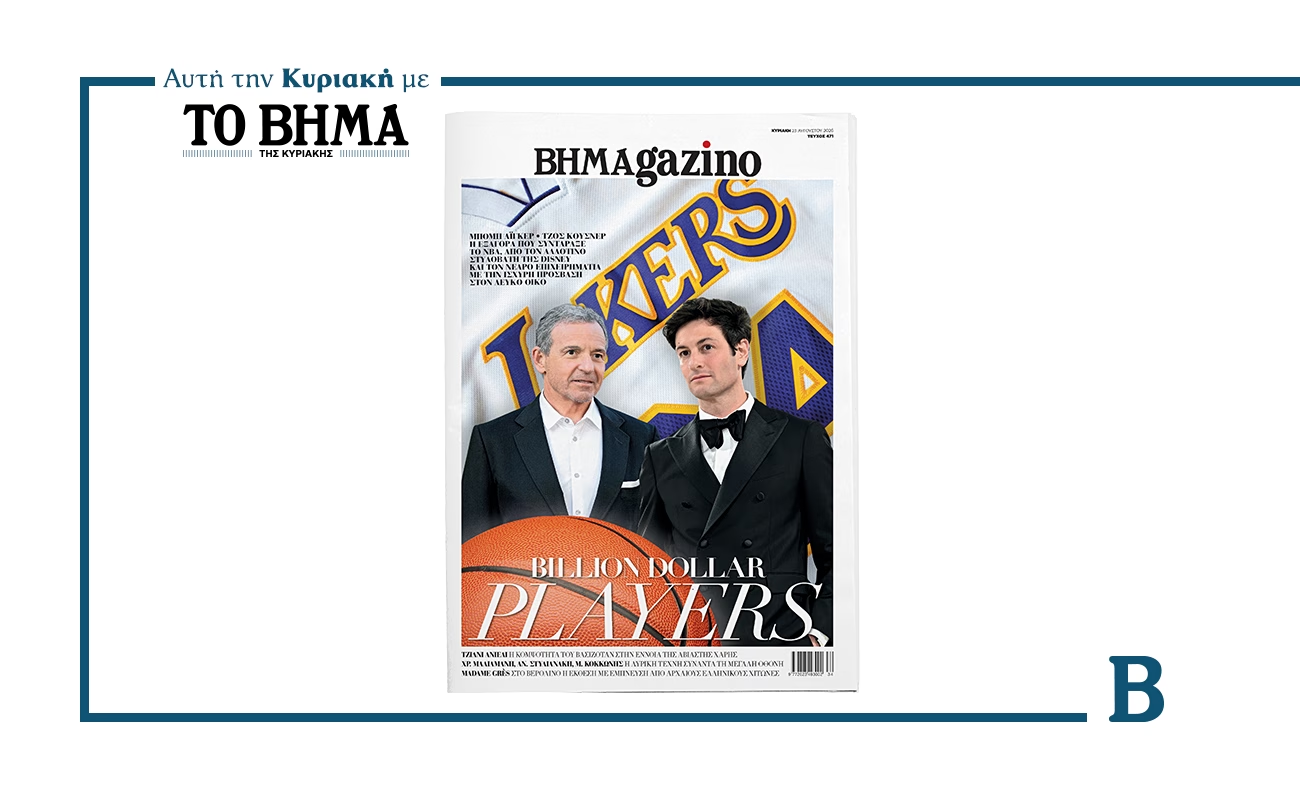
A Franchise Worth More Than a Legend
Few sports franchises in the world carry the cultural and financial weight of the Los Angeles Lakers. From the hardwood courts of the Staples Center to the boardrooms of Hollywood and Wall Street, the Lakers have long existed at the intersection of sports, entertainment, and big money. Now, a new chapter may be unfolding — one that involves two of the most recognizable names in American business: Bob Iger and Josh Kushner.
Reports have circulated suggesting a valuation of approximately $12.5 billion attached to the Lakers franchise, a figure that, if accurate, would place the team among the most valuable sports properties on the planet. Whether this number reflects a potential sale, a partial ownership stake, or simply the evolving market dynamics of professional basketball remains a subject of considerable discussion.
Who Is Bob Iger?
Bob Iger is best known for his decades-long tenure at The Walt Disney Company, where he served as Chief Executive Officer and helped transform the entertainment giant through landmark acquisitions including Pixar, Marvel, Lucasfilm, and 21st Century Fox. Iger's business acumen and deep ties to the Los Angeles entertainment community have made him a natural subject of speculation whenever high-value deals emerge in Southern California.
His name being linked to the Lakers is not entirely surprising. Iger has long been associated with the elite circles that govern major American institutions — both cultural and commercial. Disney itself has a storied relationship with sports media, and Iger's personal interest in the intersection of sports and entertainment has been well documented over the years.
Josh Kushner and the New Wave of Sports Investors
Josh Kushner, founder of the venture capital firm Thrive Capital and brother of Jared Kushner, represents a younger generation of investors who have increasingly turned their attention toward professional sports franchises. Thrive Capital has backed some of the most prominent technology companies of the past decade, and Kushner's appetite for high-profile, high-value investments is well established.
The involvement of figures like Kushner signals a broader trend in professional sports ownership. Traditional family dynasties that have held franchises for generations are increasingly giving way to — or partnering with — technology entrepreneurs, hedge fund managers, and venture capitalists who see sports teams as both trophy assets and sound long-term investments.
The $12.5 Billion Question
The figure of $12.5 billion is striking by any measure. For context, the Dallas Cowboys, widely regarded as the most valuable franchise in the NFL and among the most valuable in all of global sports, has been valued at approximately $10 billion in recent assessments. A Lakers valuation surpassing that would represent a significant milestone not just for basketball, but for American professional sports as a whole.
It is worth noting that sports franchise valuations have accelerated dramatically in recent years. Media rights deals, global branding opportunities, expanding digital revenue streams, and increased competition among wealthy buyers have all contributed to pushing prices to levels that would have seemed unimaginable even a decade ago.
- The NBA's national media rights deal, worth tens of billions of dollars over multiple years, has significantly boosted the financial outlook for all franchises.
- The Lakers' global brand recognition — built on the legacies of players like Magic Johnson, Kareem Abdul-Jabbar, Shaquille O'Neal, and Kobe Bryant — adds a premium that few other teams can claim.
- Los Angeles itself, as the second-largest media market in the United States and a global entertainment capital, provides a geographic advantage that amplifies the franchise's value.
The Buss Family and the Question of Ownership
The Lakers have been owned by the Buss family since Jerry Buss purchased the team in 1979. Following his death in 2013, ownership passed to his children, with Jeanie Buss serving as the controlling owner and president of the franchise. The family has presided over multiple championship eras and has been deeply intertwined with the identity of the team.
Any discussion of new investment or ownership changes inevitably raises questions about the Buss family's long-term plans. Jeanie Buss has consistently emphasized her commitment to maintaining the family's connection to the franchise. However, the economics of modern sports ownership — with valuations reaching levels that strain even substantial family fortunes — often push families toward bringing in outside capital partners.
A Broader Shift in Sports Economics
The speculation surrounding the Lakers is part of a much larger transformation taking place across professional sports. The NBA, in particular, has seen a dramatic reassessment of franchise values in recent years. Teams that sold for hundreds of millions of dollars just fifteen or twenty years ago are now being valued in the billions.
This shift has been driven by several converging factors. Streaming platforms and technology companies have entered the bidding for sports broadcasting rights, creating fierce competition and driving up prices. The globalization of basketball — with significant fan bases in Europe, Asia, and Latin America — has opened new revenue opportunities that previous generations of owners could not have anticipated.
Professional sports franchises have increasingly come to be seen not merely as sports businesses, but as diversified entertainment and media properties with global reach and brand value that extends well beyond the games themselves.
What Comes Next
At this stage, much of what surrounds the reported $12.5 billion valuation and the names attached to it remains in the realm of speculation and preliminary discussion. No formal sale or ownership restructuring has been confirmed. However, the fact that such conversations are reportedly taking place — and that figures of Iger and Kushner's stature are being mentioned — speaks to the extraordinary financial gravity the Lakers exert in today's sports marketplace.
For fans of the franchise, the primary concern remains what happens on the court. Championships, not balance sheets, define the Lakers' legacy. But in an era when the business of basketball has grown to rival its sporting dimensions, the two are increasingly inseparable. Who owns the Lakers, and at what price, may ultimately shape the team's competitive future just as much as the players it drafts or the coaches it hires.
The coming months are likely to bring greater clarity. Until then, the $12.5 billion figure hangs in the air — a number that captures, perhaps better than any other, just how far professional sports has traveled from its origins as a game played for love of competition.