Why do luxury brands destroy unsold products?
Luxury brands destroy unsold products primarily to protect the perceived value and exclusivity of their brand identity. When high-end items are sold at significant discounts on the secondary or parallel market, it undermines the prestige that justifies their premium price tags. For luxury houses, the risk of their goods being perceived as 'cheapened' by mass availability is often seen as a greater threat than the financial loss incurred by destroying the inventory.
This strategy creates a controlled environment of scarcity. By ensuring that every item available to the public is part of a curated, full-price ecosystem, brands maintain their status as symbols of status and refinement. The alternative—allowing surplus stock to flood discount retailers—could lead to a loss of consumer trust among the elite clientele who pay top dollar for the assurance of exclusivity.
The economics of brand dilution
The economic logic rests on the concept of price integrity. In the luxury sector, price is not just a reflection of cost but a signal of quality and social standing. If a luxury handbag becomes common due to oversupply, the psychological incentive for the target demographic to purchase it diminishes. Therefore, destroying stock acts as a form of inventory management that prioritizes long-term brand equity over short-term liquid asset recovery.
How have major fashion houses handled unsold stock?
Major fashion houses have a documented history of managing excess inventory through various forms of destruction. While some companies have made public commitments to change, the scale of previous operations highlights the depth of the practice.
- Burberry: The British luxury house became a prominent example when it admitted in its 2018 financial statements to destroying an unusually large volume of unsold clothing, accessories, and fragrances. The value of this destruction was reported at £28.6 million, which equates to approximately €45.25 million in current terms. Over a five-year period, the company reportedly destroyed goods with a total value of £90 million, roughly €142.5 million in today's currency. Following intense criticism from environmental organizations regarding the waste of resources, Burberry announced it would cease burning unsold goods in favor of more sustainable solutions.
- Chanel: Recent legal proceedings in Hong Kong have brought Chanel's practices under scrutiny. According to Bloomberg, a trial involving four former employees revealed that the company's Hong Kong warehouse systematically destroyed between 10,000 and 20,000 items of clothing every three to six months using a fabric shredding machine. Given that Chanel's ready-to-wear jackets can retail between €7,300 and over €11,000, estimates suggest that a single warehouse could be destroying goods worth approximately €640 million annually at European retail prices. While Chanel stated these figures do not reflect current practices and that they are aligning with sustainability goals, the company has not denied that some level of product destruction continues.
- Other Luxury Groups: While some brands like Kering (owner of Gucci and Saint Laurent) and Prada have made public pledges to stop destroying unsold goods—Prada starting its commitment in 2024—others remain under suspicion. Louis Vuitton is frequently cited in discussions regarding the practice, though concrete evidence is often harder to obtain compared to the admissions of Burberry or the legal disclosures involving Chanel.
What is the impact of recent civil unrest on luxury retail?
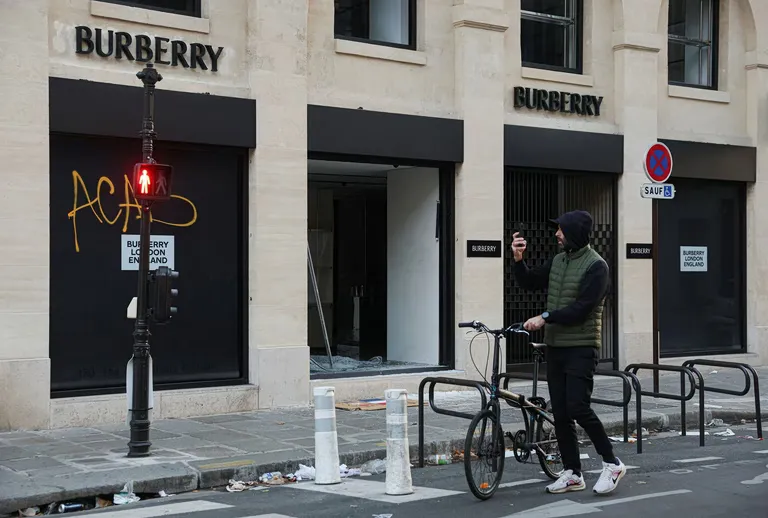
The luxury sector has recently faced significant physical threats from civil unrest and looting, adding a layer of volatility to their operations. In Paris, recent incidents involving masked groups targeting luxury boutiques like Louis Vuitton, Hermès, and Burberry caused widespread disruption. These events have not only resulted in direct inventory loss but also significant property damage.
The financial implications of such unrest are substantial. According to Morningstar, insurance companies are estimated to face claims ranging from €1 billion to €1.2 billion due to these types of damages. This figure is notably higher than the €730 million in claims recorded following the civil unrest in 2023. Beyond the immediate financial hit, these incidents force luxury brands to reconsider their security protocols and the physical vulnerability of their flagship locations in high-traffic urban areas.
How will EU regulations change luxury waste management?
The era of unhindered product destruction is facing a significant legislative challenge from the European Union's push for a circular economy. The EU is increasingly mandating a shift from a linear 'take-make-dispose' model to one focused on reuse, recycling, and upcycling.
Starting in March 2027, the EU will require luxury goods companies to report the volume of unsold products they destroy and provide specific justifications for doing so. This transparency is intended to discourage wasteful practices by exposing the massive scale of resource loss to the public and shareholders. The potential for reputational damage is high; if a brand that prides itself on excellence is seen to be 'throwing money and resources in the trash,' it may alienate the increasingly eco-conscious luxury consumer.
Regulatory loopholes and exemptions
Despite these new mandates, certain loopholes remain that may allow the practice to persist in specific forms. For instance, leather goods and handbags—which often carry the highest profit margins—are currently excluded from certain prohibitions against destruction. Additionally, products with prominent, non-removable logos may also be exempt, as removing the branding would render the product unsellable and essentially cause the same damage the law seeks to prevent. Consequently, while the 'burning' of stock may decrease, the physical destruction of certain high-margin categories may continue under the guise of technical necessity.
FAQ: Luxury Brand Product Destruction
Why do luxury brands destroy items instead of donating them?
Luxury brands destroy items to prevent brand dilution. Donating or selling unsold goods at a discount can flood the market with 'cheapened' versions of their products, which undermines the exclusivity and high price points that define their prestige and appeal to elite consumers.
What was the Burberry destruction scandal?
In 2018, Burberry admitted to destroying approximately £28.6 million worth of unsold products, including clothes and perfumes, to protect its brand value. This led to significant backlash from environmental groups, eventually forcing the company to commit to more sustainable inventory management practices.
Is Chanel currently destroying clothing?
While Chanel has stated that it is aligning with sustainability commitments, legal cases in Hong Kong revealed that the company previously used shredding machines to destroy thousands of garments every few months. The company maintains that these historical figures do not reflect their current operational practices.
How does the EU plan to stop luxury waste?
The EU is implementing circular economy regulations that will require luxury brands to report the amount of unsold stock they destroy starting in March 2027. This transparency aims to hold companies accountable and encourage more sustainable practices like recycling and upcycling.
Are all luxury products subject to destruction bans?
No, there are currently exemptions. High-margin items like leather goods and handbags are often excluded from certain destruction bans. Additionally, products with permanent logos that cannot be removed without damaging the item may also fall outside the scope of these regulations.
Key takeaways
- Luxury brands destroy unsold stock to maintain artificial scarcity and protect high price points.
- Burberry historically destroyed up to €142.5 million in goods over five years to protect its image.
- Chanel faced scrutiny after reports suggested it shredded thousands of items in its Hong Kong warehouse.
- New EU regulations starting in 2027 will require brands to report and justify product destruction.
- Loopholes for leather goods and branded items may allow some destruction to continue.
Conclusion
The practice of destroying unsold luxury goods represents a profound tension between the economic necessity of brand prestige and the global imperative for environmental sustainability. While brands like Burberry and Chanel have historically prioritized the protection of their market exclusivity through the destruction of inventory, the tide is turning. The combination of intense public scrutiny and upcoming EU transparency mandates is forcing a transition toward the circular economy. As luxury houses move toward more sustainable models, they must find ways to maintain their aura of exclusivity without the ecologically costly method of physical destruction.