How did KEVE transform from a local producer to a global exporter?
The transformation of KEVE (Keramourgía Voríou Elládas) began with a fundamental commitment to production excellence and continuous technological upgrading. Since its inception in 1935 as a producer of handmade bricks, the company has systematically invested in the infrastructure required to meet diverse international standards. A pivotal moment in this journey was the acquisition of its first press in 1953, which set the stage for decades of modernization.
Today, the company's manufacturing process is characterized by high levels of automation and precision. Key technological drivers include:
- Raw Material Control: Systematic inspection and investment in dry grinding processes to ensure material homogeneity.
- Advanced Machinery: The integration of modern mechanical equipment and robotic applications to maintain production stability.
- Digital Oversight: The implementation of machine vision systems and Artificial Intelligence to detect and prevent manufacturing defects in real-time.
This technological foundation allows KEVE to ensure that every product meets the rigorous quality requirements of the various international markets it serves, ranging from the Balkans to East Asia.
What is the impact of KEVE's new lightweight brick technology?
KEVE is shifting its focus from selling individual products to providing integrated construction solutions that address modern demands for energy efficiency and ease of installation. In 2026, the company launched a new generation of bricks that are 10% lighter than previous models, with a strategic goal to eventually reduce weight by 20%.
This innovation serves multiple strategic purposes for both the manufacturer and the end-user:
Logistical and Structural Advantages
Reducing the weight of heavy ceramic products directly addresses one of the most significant barriers in the construction material industry: transportation costs and complexity. Lighter bricks facilitate easier handling on construction sites, speeding up the assembly process and reducing physical strain on workers. Furthermore, the reduction in weight is being paired with research into how these materials contribute to the overall performance of a building, specifically regarding thermal capacity, acoustic insulation, and seismic resilience.
Beyond logistics, the move toward lighter materials is a core component of the company's sustainability strategy. The optimized production process for these new bricks contributes to a reduction in CO₂ emissions and a lower overall environmental footprint, aligning with the global construction industry's shift toward green building practices.
How is KEVE expanding its international footprint?
KEVE has successfully established a presence in more than 40 countries, reaching markets as diverse as Europe, North Africa, India, South Korea, New Zealand, and Curacao. According to Dimitris Triantafyllou, International Sales Manager at KEVE, the company currently exports roughly 50% of its total production.
The company’s expansion strategy is not merely about geographical reach but about overcoming the inherent difficulty of exporting high-volume, heavy goods. The success of this strategy is evidenced by several key developments:
- Market Diversification: Moving beyond traditional European markets to capture growing demand in Asia and Oceania.
- US Market Entry: In 2026, the company made its inaugural move into the United States market, marking a significant milestone in its global ambitions.
- Relationship Building: Focusing on long-term trust with international partners rather than simple transactional exports.
What role does the Serbian production base play in KEVE's growth?
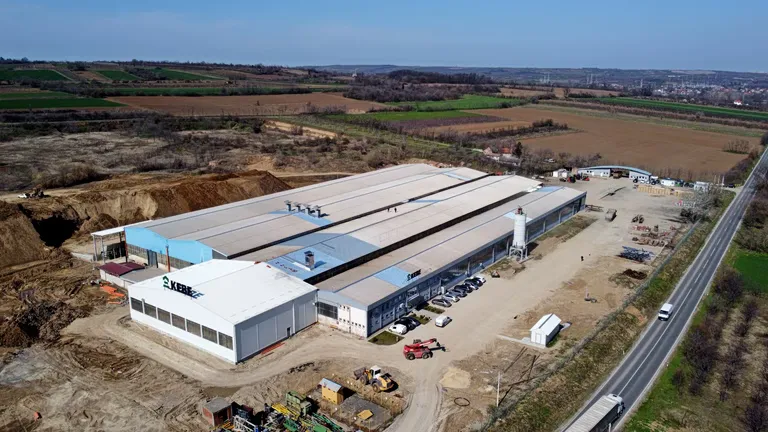
A major pillar of KEVE's international strategy is the establishment of a localized production base outside of Greece. In 2024, the company invested €16.5 million to acquire and upgrade manufacturing facilities in Mihajlovac, Serbia. This facility became fully operational in 2026.
The Serbian unit serves several critical functions in the company's broader ecosystem:
- Increased Capacity: The Mihajlovac plant began with an initial capacity of approximately 600 tons per day, with plans to scale up to 1,000 tons per day by 2027.
- Regional Hub: It acts as a strategic base in the Balkans, allowing the company to support regional growth and reduce the logistical burden of shipping from Greece.
- Economic Impact: The investment fosters local economic activity and job creation within the Serbian manufacturing sector.
By diversifying its production locations, KEVE mitigates the risks associated with centralized manufacturing and positions itself to respond more rapidly to regional market fluctuations.
How is sustainability being integrated into the manufacturing process?
Sustainability at KEVE is treated as a core business driver rather than a compliance requirement. The company has proactively adopted Environmental, Social, and Governance (ESG) principles and has obtained Environmental Product Declaration (EPD) certification to validate its environmental claims.
Looking toward 2030, the company's vision involves a complete transformation of the building process. This includes developing solutions that simplify construction for professionals while maximizing energy efficiency. By integrating sustainability into both the product design (through lightweight, low-emission bricks) and the corporate strategy (through ESG and EPD), KEVE aims to lead the industry toward a more environmentally responsible future.
Frequently asked questions
How many countries does KEVE export to?
KEVE currently exports its products to more than 40 countries. Its global reach spans from the Balkans and North Africa to major markets in Asia, including India and South Korea, as well as New Zealand and Curacao.
What is the significance of the Serbian investment?
The €16.5 million investment in Mihajlovac, Serbia, established a new production base outside of Greece. This facility, operational since 2026, aims to reach a capacity of 1,000 tons per day by 2027, supporting Balkan and international growth.
How is KEVE addressing environmental concerns?
KEVE addresses environmental concerns through the production of lighter, low-CO₂ bricks and by obtaining Environmental Product Declaration (EPD) certification. The company also follows ESG (Environmental, Social, and Governance) principles to ensure sustainable operations.
What makes the new generation of KEVE bricks different?
The new generation of bricks, launched in 2026, is 10% lighter than previous versions. The company intends to eventually reach a 20% weight reduction, which improves transport efficiency and simplifies the construction process.
What percentage of KEVE's production is exported?
Approximately 50% of KEVE's total production is destined for international markets. This high export ratio highlights the company's successful transition from a local Greek manufacturer to a global industrial player.
Key takeaways
- KEVE exports approximately 50% of its production to over 40 global markets.
- A €16.5 million investment in Serbia established a new production base in 2026.
- New brick technology launched in 2026 is 10% lighter than previous models.
- The company uses AI and machine vision to ensure high-quality manufacturing standards.
- KEVE has expanded its presence into the US market as of 2026.
Conclusion
The evolution of the KEVE ceramics industry demonstrates how a traditional manufacturing firm can successfully navigate the complexities of global trade. By combining nearly a century of technical expertise with cutting-edge innovations—such as AI-driven production and lightweight, sustainable materials—KEVE has overcome the logistical hurdles inherent in the construction sector. The strategic establishment of a production hub in Serbia further secures its position in the Balkan region and beyond. As the company moves toward its 2030 goals, its focus on energy efficiency and environmental certification positions it as a leader in the modern, sustainable building era.