Why is the student housing crisis driving mass mobilizations?
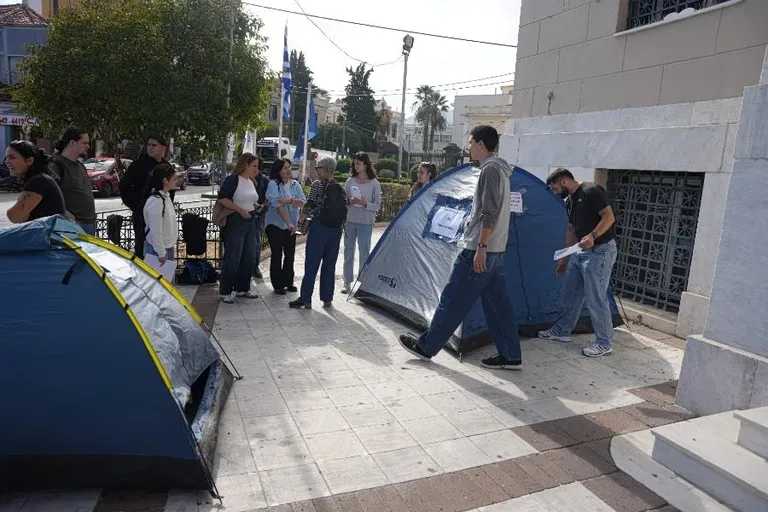
The current wave of student protests, which has seen demonstrators setting up tents in public squares and other communal areas, is a direct response to the fundamental human need for shelter. These mobilizations are not merely political statements but are born from a primal necessity to secure a place to live while pursuing education. The crisis has brought the right to student dormitories and affordable housing to the forefront of the national discourse.
Students are increasingly finding themselves in a position where their ability to complete their tertiary education is contingent upon their ability to secure housing. This link between housing stability and academic success has become a critical point of contention. The protests serve as a visible symptom of a deeper systemic failure to provide the basic infrastructure required for a functional higher education system.
How do economic factors exacerbate student housing insecurity?
Rising living costs and a lack of centralized housing policy are the primary drivers of the current instability. The crisis is fueled by a widening gap between micro-ownership and social housing, alongside an unutilized building stock that fails to meet the needs of the student population. As rent prices continue to climb, many households are being pushed into economic asphyxiation, making it nearly impossible to cover the costs of student accommodation.
The absence of a structured national housing policy means that there is no safety net for students who fall victim to market volatility. Instead of a coordinated effort to provide subsidized housing, the market is left to dictate terms that are often out of reach for the average student. This economic pressure forces many to seek employment just to meet basic rent requirements, often at the expense of their studies.
The role of market volatility and cost of living
The interplay between high inflation and stagnant student support creates a precarious environment. When housing costs rise faster than the financial resources available to students and their families, the result is a direct threat to academic continuity. The current economic climate has transformed housing from a basic right into a luxury that many students can no longer afford.
What is the impact of housing instability on student welfare?
The deprivation of access to dignified student housing has profound implications for both mental health and social cohesion. The World Health Organization has identified youth mental health as a global priority, and the stress of housing insecurity is a direct contributor to psychological distress. When students live under the constant threat of eviction or homelessness, their ability to focus on learning is severely compromised.
Furthermore, the housing crisis exacerbates existing class divides. It creates a widening gap between students from affluent backgrounds, who can navigate the expensive private market, and those from lower-income families, who are left with dwindling public options. This inequality does not just affect individuals; it undermines the social fabric by creating a tiered system of educational access based on wealth rather than merit.
How does the current policy landscape affect higher education?
The shift toward the expansion of non-state universities, coupled with perceived inaction regarding public student welfare, reflects a neoliberal policy direction. Critics argue that this approach prioritizes profit and private enterprise over the social responsibility of the state. This imbalance suggests a move away from viewing higher education as a public good and toward treating it as a market-driven commodity.
The consequences of this policy direction are multi-layered and potentially permanent. When a significant portion of the student population is excluded from stable housing, the nation risks a massive loss of human capital. The erosion of the rule of law and the sense of social justice is also a significant byproduct, as students feel abandoned by the institutions meant to support their development.
What mechanisms are needed to address these challenges?
There is an urgent need for a systematic monitoring mechanism to track the real needs of the student population. Currently, there is a lack of empirical data regarding the quality of student housing, the inability of households to meet expenses, and the extent to which students must work to afford rent. An observatory dedicated to student welfare could provide the necessary data to drive informed policy decisions.
Accountability and transparency from relevant ministries and public bodies are essential to resolve this crisis. Without a data-driven approach and a commitment to public investment in student dormitories, the cycle of protest and insecurity is likely to continue. Addressing the housing crisis requires more than just temporary fixes; it requires a fundamental realignment of how the state supports its future workforce.
FAQ: Student Housing Crisis
What are the main causes of student housing instability?
The primary causes include rising living costs, a lack of centralized national housing policies, and the increasing gap between private market rents and student budgets. Additionally, the underutilization of existing building stock and the focus on private higher education over public welfare contribute to the crisis.
How does housing insecurity affect academic performance?
Housing insecurity creates significant psychological stress and financial pressure, which can lead to decreased concentration and higher dropout rates. When students must prioritize finding food and shelter or working long hours to pay rent, their ability to engage fully with their studies is severely diminished.
What is the link between housing and social inequality?
The housing crisis widens the gap between wealthy and low-income students. Affluent students can access stable private accommodations, while those from disadvantaged backgrounds are often left with inadequate public options or face homelessness, creating an unequal playing field in higher education.
Is there a formal way to monitor student housing needs?
Currently, there is a notable absence of a formal mechanism to systematically collect empirical data on student housing. Advocates suggest that a dedicated observatory could track housing quality, household expenditure, and student employment patterns to better inform government policy and intervention.
Why are students protesting in public squares?
Students are protesting because they lack access to affordable and dignified accommodation. The use of tents in public spaces is a visible manifestation of their struggle to secure basic shelter, serving as a direct appeal for state intervention and the protection of their right to housing.
Key takeaways
- Student housing insecurity is a direct threat to the fundamental human right to shelter and academic success.
- Rising living costs and a lack of central housing policy are driving mass student protests.
- The crisis exacerbates social inequality by creating a divide between wealthy and low-income students.
- A lack of empirical data prevents effective policy responses to the evolving needs of the student population.
Conclusion
The student housing crisis represents a critical intersection of economic instability, social inequality, and educational policy failure. As students face the very real threat of homelessness, the impact extends far beyond individual hardship, affecting national human capital and social cohesion. Addressing this issue requires more than just temporary measures; it demands a robust, transparent, and state-led approach to housing that treats student welfare as a fundamental pillar of a healthy society. Without systemic change and increased institutional accountability, the gap between educational opportunity and economic reality will only continue to widen.