What did the 2021 State Department report reveal?
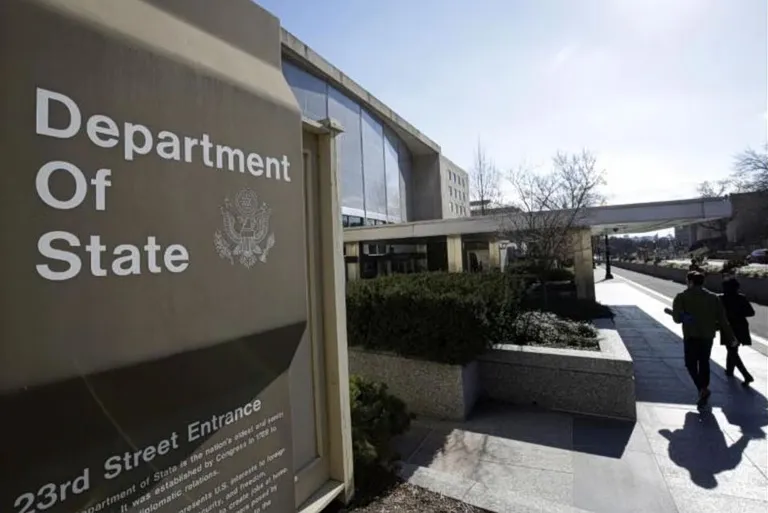
The Office of Inspector General (OIG) of the State Department released an evaluation in 2021 that shed light on the operational state of American diplomatic missions during the first presidential term of Donald Trump. The report was not a single snapshot but a comprehensive analysis based on 52 separate inspection reports issued between February 2017 and April 2020.
The findings were stark: the report revealed that in 33% of the inspected missions—specifically 17 out of the 52—the head of the mission exhibited deficiencies in one or more principles of leadership and management. These deficiencies were measured against the specific guidelines established by the State Department. While a majority of the missions (67%, or 35 out of 52) were found to foster a positive, inclusive, and professional environment, the identified gaps in the remaining third raised questions regarding the consistency of command and administrative stability across the global diplomatic network.
How were the ambassadors' performances evaluated?
The evaluation of ambassadors and mission heads is a multi-faceted process governed by strict protocols. In this instance, the OIG assessed performance based on adherence to leadership and management principles, as well as the ability to execute the strategic goals of the United States. This includes how effectively a leader manages their staff and how well they align the mission's resources with broader national interests.
The report categorized performance into several distinct areas. While most leaders successfully created a professional climate, a significant subset struggled with the technical aspects of strategic governance. Specifically, the OIG found that 13% of the missions (7 out of 52) failed to utilize the State Department's strategic planning tools effectively. This failure meant that these leaders were not properly leveraging the mechanisms designed to ensure that every diplomatic action contributed to the overarching goals of US foreign policy. The assessment looked at whether leaders were reviewing progress toward the Integrated Country Strategy and whether they were properly synchronizing mission resources, such as travel plans and representation activities, with those strategic mandates.
Specific issues identified in certain embassies
The report provided granular detail on how these leadership and management deficiencies manifested in different geographic locations, painting a picture of varied operational struggles. In Podgorica, Montenegro, the mission faced instability characterized by frequent reassignments of duties and shifting priorities, which made it difficult for staff to execute their core responsibilities effectively.
In Somalia, the challenges were more related to command clarity; employees reported a need for more explicit instructions and more timely decision-making from leadership. Communication silos were also a noted issue, particularly in Riyadh, where the head of the mission reportedly limited communication to a very small circle of employees, potentially isolating much of the staff from the decision-making process. Furthermore, in the Gambia, inspectors noted a specific type of administrative pressure: employees felt compelled to re-examine visa applications that had already been denied. It is important to note that the report clarified this finding as a matter of administrative pressure rather than a finding that illegal visas were actually issued.
What impact did these weaknesses have on foreign policy objectives?
The disconnect between mission management and national strategy had direct implications for US interests abroad. The OIG noted that the 13% of missions failing to use strategic planning tools were essentially operating without a cohesive roadmap. These leaders did not regularly review progress regarding the Integrated Country Strategy, nor did they ensure that their staff were aware of the mission's primary goals.
This lack of alignment meant that resources—including staff time, official travel, and representation efforts—were not always directed toward the most critical policy objectives. When a mission head fails to communicate strategic goals to the entire staff or fails to align the mission's activities with the broader foreign policy framework, the effectiveness of the US presence in that country is diminished. The report suggests that without this synchronization, the mission risks acting in a vacuum, potentially missing opportunities to advance US interests through coordinated diplomatic and economic action.
Positive aspects of ambassadorial performance
Despite the documented administrative and strategic shortcomings, the report also highlighted areas of significant success. In fact, the overall evaluation of diplomatic performance remained largely positive. The OIG found that 83% of the inspected missions (43 out of 52) successfully fulfilled the requirements set forth in the President's Letter of Instructions and the 2 FAM 113.1 regulation.
The President's Letter of Instructions mandates that mission heads perform several critical functions: representing US interests to foreign governments and international organizations, expanding markets for US exports, reporting on vital political and economic developments, and building relationships with emerging leaders across all levels of society. The report noted that the majority of ambassadors were highly effective in these areas. They maintained high-level contacts with host governments, kept Washington well-informed, utilized media and public events to reach key decision-makers, and actively promoted US trade and investment. Furthermore, they demonstrated competence in coordinating US foreign aid and exercising authority over all executive branch activities within their respective jurisdictions.
What were the internal control weaknesses identified?
Perhaps one of the most widespread findings in the report concerned the mechanisms of internal oversight. The OIG discovered that 51 out of the 52 inspected missions contained findings related to weaknesses in internal control mechanisms. This suggests that nearly every mission reviewed faced challenges in maintaining the rigorous oversight required for large-scale government operations.
These internal control weaknesses are critical because they create potential vulnerabilities in the management of programs, personnel, resources, and sensitive information. While the report was careful to state that these findings did not necessarily constitute evidence of corruption, they did highlight a systemic need for improved management practices and more robust oversight. The prevalence of these issues across almost the entire sample of missions suggests that the administrative infrastructure used to monitor embassy operations requires significant attention to mitigate risks to US government assets and interests.
Frequently asked questions
What was the main finding of the 2021 State Department report?
The report found that 33% of US diplomatic missions during the first Trump term exhibited deficiencies in leadership and management, while nearly all missions (51 out of 52) showed weaknesses in internal control mechanisms.
How did these weaknesses affect US foreign policy objectives?
In 13% of missions, a lack of effective strategic planning meant that leaders failed to align mission resources and activities with the Integrated Country Strategy, potentially hindering the achievement of US foreign policy goals.
Were there any positive aspects noted in the report?
Yes, 83% of the missions were found to be meeting the requirements of the President's Letter of Instructions, successfully handling tasks like high-level diplomacy, trade promotion, and reporting to Washington.
Did the report find evidence of corruption?
The report did not find evidence of corruption, but it did identify significant weaknesses in internal controls that could pose risks to resources and personnel if not addressed through better oversight.
What specific embassy issues were mentioned?
The report cited issues such as shifting priorities in Montenegro, a need for clearer guidance in Somalia, limited communication circles in Riyadh, and pressure regarding visa re-evaluations in the Gambia.
Key takeaways
- The 2021 OIG report identified leadership and management deficiencies in 33% of US diplomatic missions during the Trump administration.
- 13% of missions failed to effectively use strategic planning tools to meet US foreign policy objectives.
- Internal control weaknesses were identified in 51 of the 52 missions inspected.
- Despite administrative gaps, 83% of mission heads fulfilled the requirements of the President's Letter of Instructions.
- Ambassadors generally succeeded in high-level diplomacy, trade promotion, and maintaining communication with Washington.