How did Kevin Smith become an independent cinema icon?
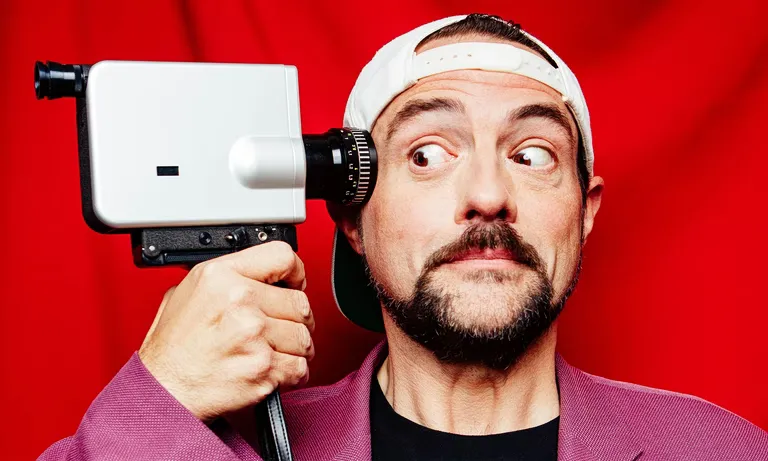
Kevin Smith established himself as a defining voice of the 1990s through his ability to turn micro-budget storytelling into massive commercial successes. His breakout hit, Clerks, served as a realistic, bittersweet portrayal of a generation of 'workers without a future,' capturing the existential dread and humor of the era. The film's financial performance set a precedent for the potential of independent filmmaking; produced on a mere $27,500, it went on to earn $4.4 million at the box office.
This ability to maximize return on investment became a hallmark of Smith's career. Following the success of Clerks, he continued to demonstrate high efficiency in production. For instance, his film Chasing Mary was produced for $250,000 but generated $12 million in revenue. By the late 1990s, the 56-year-old director and actor had become a cult figure, known for delivering high-concept narratives on minimal budgets, which allowed him to maintain creative control while achieving mainstream visibility.
What was the core conflict of the Dogma controversy?
The controversy surrounding Dogma centered on its theological premise, which many religious groups viewed as blasphemous. Released in 1999, the film follows two fallen angels who attempt to exploit a perceived loophole in Catholic dogma to return to Heaven. The narrative tension arises from the idea that if the angels succeed, it would imply that God—traditionally viewed as infallible—made a mistake in their expulsion.
In the social climate of the United States during the 1990s, questioning the infallibility of the divine was a highly sensitive subject. This thematic choice directly challenged the core tenets of established Christian organizations. Consequently, as the film approached its New Jersey premiere on November 11, 1999, several religious groups mobilized to protest the screening. Their goal was to prevent the film's release by framing it as an affront to faith, leading to organized demonstrations aimed at curbing its public exposure.
The theological stakes of the film
The film's plot is not merely a fantasy; it is a structured critique of religious doctrine. By using characters like Matt Damon and Ben Affleck to represent fallen angels, Smith placed high-profile talent within a story that interrogated the mechanics of salvation and divine law. For religious critics, the risk was not just the depiction of angels, but the suggestion that religious structures could be manipulated or found lacking.
How did Kevin Smith respond to the religious protests?
Kevin Smith responded to the organized protests by joining the demonstrators himself, a move that blended irony with calculated publicity. While the actual protest in New Jersey was relatively small—consisting of only a few dozen angry individuals—Smith used the opportunity to participate in the spectacle. Carrying placards and maintaining a humorous persona, he effectively turned the protest into a stage for his own brand of irreverence.
This tactic was a literal application of the adage that 'there is no such thing as bad publicity.' Journalists covering the event interviewed Smith without initially realizing his identity. During these interactions, Smith played along with the tension, offering cryptic and self-deprecating responses. When asked about the film's meaning, he famously remarked that he didn't know, but had been told it was 'not good.' This approach allowed him to navigate the controversy without engaging in a heavy-handed theological debate, instead using the friction to keep Dogma in the news cycle.
The media's role in the spectacle
The presence of the press was crucial to the success of Smith's unconventional marketing. By providing a target for journalists—a director who was essentially protesting his own work—Smith ensured that the story moved from religious circles into the mainstream media. This transformed a localized protest into a broader cultural conversation about censorship and artistic freedom.
What was the commercial and cultural impact of Dogma?
Despite the intense backlash from religious organizations, Dogma proved to be a significant commercial success. The film, which carried a production budget of $10 million, ultimately earned $45 million at the box office. This performance demonstrated that religious controversy could serve as a powerful driver for viewership, particularly among the younger audiences who already viewed Smith as a cultural icon.
The film's legacy is twofold: it solidified Smith's reputation as a filmmaker who could provoke and profit simultaneously, and it remains a case study in how independent creators can navigate institutional opposition. While the protests sought to silence the film, they ultimately contributed to its visibility, proving that in the modern media landscape, controversy can be as effective as traditional advertising.
FAQ: Kevin Smith Dogma controversy
Why did Christian organizations protest the film Dogma?
Christian organizations protested because they considered the film's premise blasphemous. The plot involves fallen angels attempting to exploit a loophole in Catholic dogma to return to Heaven, which challenges the concept of God's infallibility and the absolute nature of religious doctrine.
How did Kevin Smith participate in the protests?
Kevin Smith joined the protesters in New Jersey with placards to capitalize on the media attention. He used the moment to engage with journalists in a humorous, ironic way, following the principle that negative publicity can still serve to increase a film's visibility.
What was the budget and box office return of Dogma?
The film Dogma was produced with a budget of $10 million. Despite the religious controversy and organized efforts to block its release, it achieved significant commercial success, earning approximately $45 million at the box office.
What were Kevin Smith's earlier successful films?
Before Dogma, Smith became famous for Clerks, a low-budget comedy produced for $27,500 that earned $4.4 million. He also directed Chasing Mary, which cost $250,000 and grossed $12 million, establishing his reputation for high-return independent cinema.
When did the Dogma protests take place?
The protests were organized around the film's premiere in New Jersey, which took place on November 11, 1999. The demonstrations were intended to stop the screening of the film due to its perceived religious affronts.
Key takeaways
- Kevin Smith's Clerks earned $4.4 million on a $27,500 budget.
- The film Dogma was released in 1999 and sparked religious controversy.
- Smith joined religious protesters to generate publicity for his film.
- Dogma earned $45 million against a $10 million production budget.
The enduring legacy of provocative filmmaking
The intersection of Kevin Smith's Dogma and the religious protests of 1999 serves as a definitive example of how controversy can shape the trajectory of an independent film. Smith did not merely endure the backlash; he integrated it into his professional identity. By turning a theological critique into a media event, he demonstrated the power of the 'provocateur' role in cinema. This episode highlights the complex relationship between artistic expression, religious sensitivity, and the commercial realities of the film industry, where the line between offense and engagement is often blurred.