What was the context of Demosthenes' speech against Aristocrates?
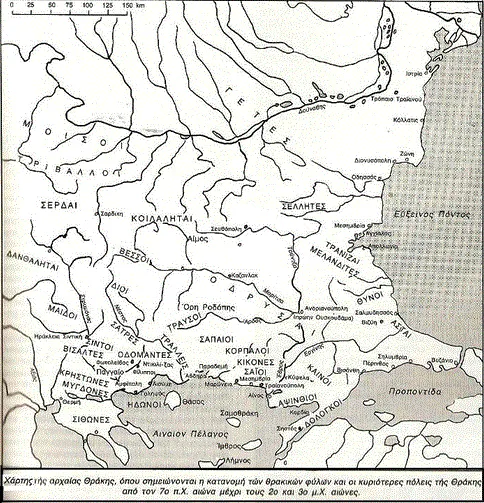
The speech known as 'Against Aristocrates' was delivered during a period of intense geopolitical shifting in the Aegean. Specifically, it dates to the years 352-351 BC, a time when the Athenian state was grappling with the expanding influence of Philip of Macedon. While the Athenians were already in a state of conflict with Philip following his seizure of Amphipolis in 357 BC, the focus of this particular rhetorical engagement was the strategic region of Thrace.
At this juncture, Philip had already initiated his first major excursion into Thracian territory. This movement represented a direct challenge to the existing balance of power and specifically threatened the maritime and commercial interests of Athens. The speech, therefore, was not merely a localized legal matter but a component of the broader Athenian struggle to maintain its influence in the face of Macedonian expansionism. The tension of the era is underscored by the fact that while some speeches were delivered in the Ecclesia (the Assembly), this particular oration was brought before the court, marking a shift in the arena of political combat.
Who delivered the speech and why?
The speech 'Against Aristocrates' was not delivered by Demosthenes himself, but by Euthycles of Thrace. Euthycles was a figure closely aligned with Demosthenes, sharing a history of service with him; the two had previously served together as a trierarch in the Hellespont. This personal and professional connection suggests that the speech was part of a coordinated political effort by the Demosthenic faction to influence Athenian policy.
While the speech appeared to be a response to a specific judicial dispute, its underlying purpose was deeply political. Euthycles used the platform to address Athenian foreign policy, particularly regarding the Thracian peninsula. By framing the legal issue within the context of national security and trade, Euthycles sought to direct the Athenian public and the court toward a more assertive stance in the north. The involvement of a former trierarch—a role tied to naval command and the protection of sea lanes—lent significant weight to the arguments regarding the necessity of maintaining control over vital maritime corridors.
What were the main arguments in the speech?
The central legal dispute revolved around a decree proposed by Aristocrates. This decree sought to provide special protection for the physical integrity of Charidemus, a mercenary leader hailing from Oreos in Euboea. The decree was a point of contention because it attempted to grant Charidemus a level of Athenian recognition and safety that Euthycles and his allies found problematic given the current political climate.
The arguments against the decree were rooted in the complex web of alliances involving Charidemus. Charidemus had aligned himself with Cersobleptes, the King of the Thracians, and had even become his son-in-law through marriage to the king's sister. Charidemus was credited with persuading Cersobleptes, along with two other Thracian rulers—the brothers of Amadocus and Berisades—to cede the Thracian Chersonese to the Athenians. In recognition of these services, Athens had honored Charidemus with a golden crown and granted him the status of an Athenian citizen. However, the speech 'Against Aristocrates' challenged the implications of this protection, suggesting that such decrees could complicate Athenian interests in a region where the loyalties of local leaders were increasingly tied to the rising power of Macedon.
Why was Thrace important to Athens?
For the Athenian state, Thrace was not merely a distant territory but a lifeline. The region's importance was primarily economic, serving as the gateway for the vital grain trade from the Euxine Sea (the Black Sea). The continuous flow of grain through the Thracian Chersonese was essential for the sustenance of the Athenian population and the stability of the city-state.
Because the grain supply was a matter of survival, any instability in Thrace or any shift in control over its coastal regions posed an existential threat to Athens. The strategic value of the Thracian peninsula meant that whoever controlled the local Thracian kings and the mercenary leaders operating in the area held the keys to Athenian food security. This economic necessity transformed Thracian politics into a central pillar of Athenian foreign policy, making every local dispute—such as the one involving Charidemus—a matter of high state importance.
How did the speech reflect Athenian politics of the time?
The 'Against Aristocrates' speech serves as a window into the highly charged and interconnected nature of Athenian domestic and foreign politics. During this period, the distinction between a courtroom battle and a debate on international relations was often non-existent. A decree regarding an individual's safety could, and often did, serve as a proxy for a debate on how Athens should handle the Macedonian threat or how it should manage its client states in Thrace.
The political climate was defined by a struggle for direction: should Athens pursue diplomatic recognition of figures like Charidemus to secure its interests, or did such moves create complications that Philip of Macedon could exploit? The fact that Euthycles, a man with maritime experience, was the one delivering the argument highlights how expertise in naval and regional affairs was weaponized in the political arena. The speech illustrates a society where rhetoric was the primary tool for navigating the dangerous waters of shifting alliances and imperial expansion.
What was the outcome of the speech?
The historical record provided focuses on the political and strategic dimensions of the speech rather than the specific legal verdict rendered by the court. However, the significance of the oration is found in its role within the broader narrative of Athenian resistance. It stands as a testament to the efforts of the Demosthenic circle to keep the Athenian consciousness focused on the looming shadow of Philip of Macedon.
By linking the case of Charidemus to the broader security of the Thracian grain routes, the speech contributed to the ongoing discourse regarding Athenian vigilance. It underscored the complexity of managing a maritime empire that relied on the cooperation of local Thracian rulers and mercenaries, all while a major land power was consolidating control in the north. The speech remains a critical piece of evidence in understanding how Athens attempted to use both law and rhetoric to safeguard its economic and political survival.
Frequently asked questions
Who was Demosthenes?
Demosthenes was a preeminent Athenian orator and statesman, widely recognized for his influential speeches that addressed the growing threat posed by Philip of Macedon to Greek independence.
What was the significance of Thrace in ancient Greece?
Thrace was a strategically vital region for Athens, primarily because it controlled the routes for the grain trade from the Black Sea, which was essential for the city's survival.
Who was Philip of Macedon?
Philip of Macedon was a powerful king whose military campaigns and expansionist policies, including his incursions into Thrace and the seizure of Amphipolis, challenged Athenian dominance in the region.
What role did Euthycles play in Athenian politics?
Euthycles was an ally of Demosthenes and a former trierarch in the Hellespont. He used his political and oratorical influence to advocate for Athenian interests in Thrace, specifically through his speech 'Against Aristocrates'.
Why was Charidemus a controversial figure?
Charidemus was a mercenary leader from Euboea who had formed close ties with the Thracian royalty, including King Cersobleptes. His status as an Athenian citizen and the protection sought for him became a focal point for debates on Athenian foreign policy.
Key takeaways
- The speech 'Against Aristocrates' was delivered in 352-351 BC during a period of Macedonian expansion.
- Euthycles, an ally of Demosthenes, delivered the speech to address both legal and strategic political issues.
- The central issue involved a decree protecting Charidemus, a mercenary leader with strong ties to Thracian royalty.
- Thrace was a critical region for Athens due to its role in securing the grain trade from the Black Sea.
- The speech highlights the intersection of legal disputes and high-stakes foreign policy in ancient Athens.