Why is Barcelona targeting short-term rentals and secondary homes?
Barcelona is implementing strict regulations to prevent properties from being used primarily for profit rather than for permanent habitation. Mayor Jaume Collboni has declared that the practice of wealthy individuals purchasing homes in major capitals to spend only a few days a year is unacceptable. The city views these secondary residences and empty properties as obstacles to providing stable housing for its citizens.
The administration's strategy focuses on areas where the housing shortage is most acute. In these zones, the city intends to restrict the use of properties for any purpose other than a primary residence. This approach is designed to redirect housing stock back into the long-term rental and ownership markets, thereby easing the pressure on local residents.
The crackdown on short-term rentals
The most visible part of this regulatory shift is the move against short-term vacation rentals. Barcelona has set a definitive timeline to phase out these rentals by 2028. To discourage the practice in the interim, the city is prepared to increase taxes on such rentals by up to 150%. This aggressive fiscal policy aims to make speculative short-term leasing less profitable than traditional long-term residential tenancies.
How is the city managing rent costs and housing supply?
Rent control measures and the expansion of public housing stocks are the primary tools being used to stabilize the local market. Since the implementation of rent freeze measures, Barcelona has seen rental prices decrease by nearly 5%. This direct intervention aims to provide immediate relief to tenants facing skyrocketing costs due to market speculation.
In addition to controlling prices, the city is working to increase the physical availability of homes. The total stock of rental properties in the city has grown by approximately 2,000 units following recent interventions. Barcelona currently maintains the largest stock of public and affordable housing in Spain, totaling nearly 12,000 homes. The municipal government has committed to doubling its capacity to provide public housing by making 1,000 apartments available every year.
What role does the European Union play in the housing crisis?
The housing crisis is being treated as a pan-European issue that requires a coordinated response from both local and continental authorities. Two years ago, Barcelona joined with Athens and other major European cities to launch the 'Mayors for Housing' initiative. This movement was founded on the principle that local cities need more autonomy and resources to fight market volatility.
The European Commission has recently responded to these local pressures by introducing the first-ever affordable housing law in its history. This legislation supports two main pillars of action for urban centers:
- Increased Local Autonomy: Providing cities with more legal tools to combat speculation and the spread of short-term rentals, which are often restricted by regional or national regulations.
- Resource Allocation: Ensuring cities have the necessary funding to build, purchase, and renovate housing units, addressing the current inadequacy of financial tools available to municipalities.
What are the social implications of the current housing market?
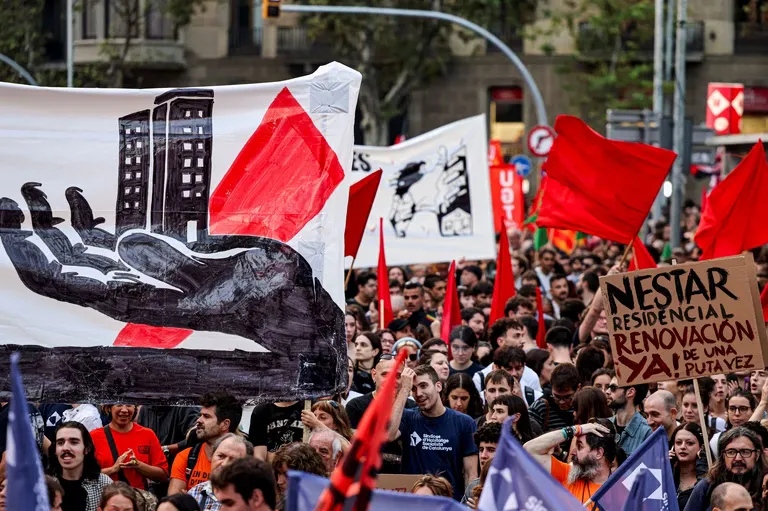
Widespread social unrest and protests regarding the cost of living are intensifying as citizens demand more effective solutions to housing affordability. Mayor Collboni has expressed solidarity with these demonstrations, noting that they represent the urgent voices of the youth and the urban middle class. These demographics are increasingly at risk of being priced out of their own neighborhoods.
The city's approach is a response to the threat of mass displacement. By changing the "rules of the game," the administration seeks to protect residents from unregulated market trends. The long-term goal is to ensure that a significant portion of a city's total housing stock remains public and economically accessible, preventing the massive price spikes that occur when housing is treated solely as a commodity.
FAQ: Housing crisis in Barcelona
What is the deadline for banning short-term rentals in Barcelona?
Barcelona aims to completely phase out short-term rentals by the year 2028. Until this deadline is reached, the city is implementing significant tax increases of up to 150% on these properties to discourage their use as speculative investment vehicles instead of permanent residences.
How much have rents decreased due to recent measures?
Since the implementation of rent freeze and control measures, rental prices in Barcelona have decreased by nearly 5%. This reduction is part of a broader strategy to stabilize the market and provide financial relief to residents facing high costs of living.
How many public housing units does Barcelona have?
Barcelona possesses the largest stock of public and affordable housing in Spain, with nearly 12,000 units currently available. The city has also committed to a plan to increase this capacity by providing 1,000 new apartments annually.
What is the 'Mayors for Housing' initiative?
The 'Mayors for Housing' initiative is a collaborative movement started by Barcelona, Athens, and other European cities. It advocates for a European-level response to the housing crisis, seeking more local autonomy and better financial resources to combat speculation and build affordable homes.
Why are the youth and middle class protesting?
The youth and urban middle classes are protesting because they face the risk of being displaced from their neighborhoods due to rising costs. They are demanding that governments implement stronger protections against market speculation and ensure that housing remains an affordable right rather than a luxury.
Key takeaways
- Barcelona plans to eliminate short-term rentals by 2028 to prioritize residential use.
- Rent prices in the city have dropped by nearly 5% following recent control measures.
- The city manages nearly 12,000 public and affordable housing units, the largest in Spain.
- Tax increases of up to 150% are being used to deter speculative short-term leasing.
- The 'Mayors for Housing' initiative seeks more EU support and local tools for cities.
Conclusion
The struggle against the housing crisis in Barcelona represents a fundamental shift in how urban spaces are managed. By moving away from a model that treats housing as a speculative asset and toward one that prioritizes habitation, the city is attempting to safeguard its social fabric. While the challenges of market volatility and rising costs remain significant, the combination of rent controls, increased public housing stock, and aggressive regulation of short-term rentals provides a roadmap for urban resilience. The success of these measures will ultimately determine whether the city can remain inclusive for its youth and middle-class residents.